Nuclear Theory archive — page 7
Three Brains in the Elevator Machine Room — Automatic Control, Manual Operation and Automatic Protection
Automatic control fine-tunes a reactor toward its targets, a separate protection system trips it irreversibly at its limits (2 of 4 channels, rods dropping within 2.7 seconds), and operators handle startup, diagnosis and supervision.
Balancing the Books — The Key Variables Control Room Operators Watch
Control room operators watch about ten key variables along the energy path and cross-check them, counting the same reactor heat three ways and recalibrating neutron detectors to the daily heat balance when they read more than 0.5% low.
Close the Lid or Open the Back Panel? — Hot Standby and Cold Shutdown
Hot standby and cold shutdown are both subcritical (keff below 0.99), but hot standby keeps the coolant near 290°C and 15.5 MPa for a fast return while cold shutdown cools it to about 93°C or below so the primary system can be opened.

Not a Switch but a Landing — The Big Picture of Nuclear Plant Shutdown
A planned PWR shutdown lowers power, makes the reactor subcritical with rods and boron, then cools from about 291°C to 93°C or below in two stages while keeping the coolant subcooled and the decay heat flowing out.
Tune Up Before the Concert — The Big Picture of Nuclear Plant Startup
Nuclear plant startup climbs the operating modes in a fixed order, heating the plant with pump heat, reaching criticality at almost zero power, synchronizing the generator with the 60 Hz grid and then raising power over more than a day.
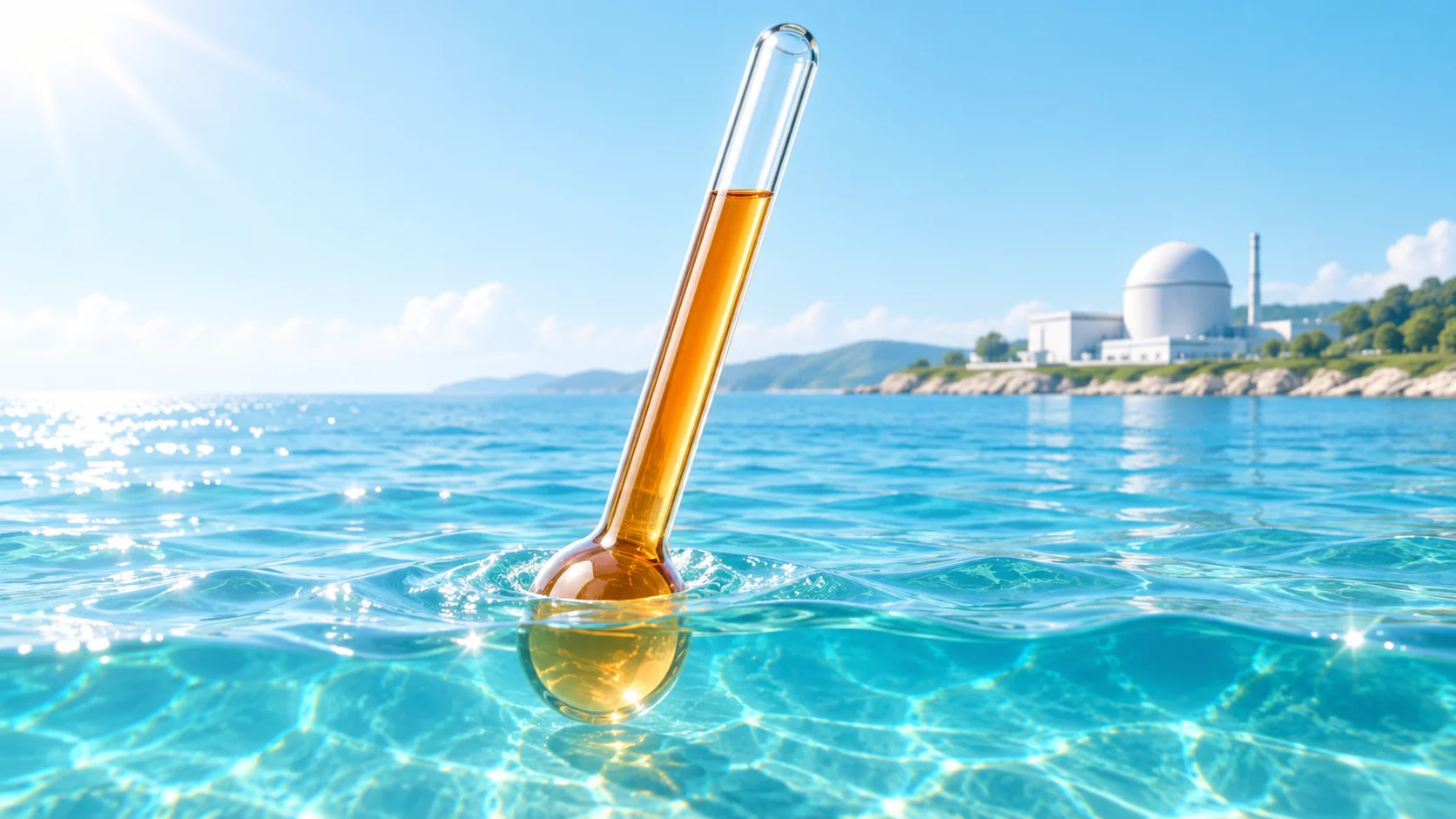
1°C of Seawater, 6 MW of Electricity — How Cooling-Water Temperature Affects a Nuclear Plant's Efficiency
A 1°C rise in condenser cooling-water temperature cuts a PWR's electric output by roughly 0.45%, about 6 MW for a 1,400 MW plant, and in summer thermal-discharge and ultimate-heat-sink temperature limits can force derating or shutdown.
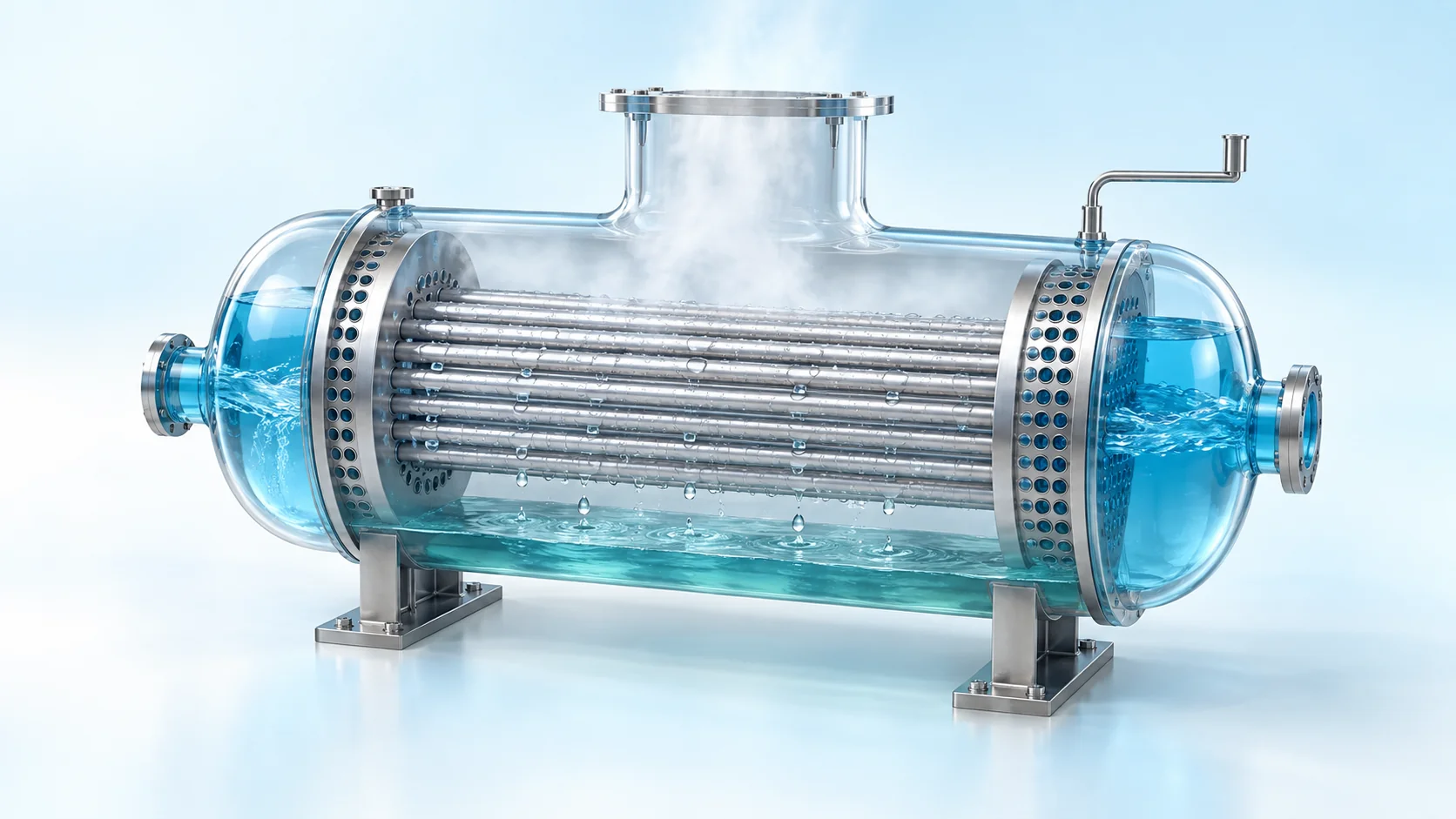
Why an Empty Can Crumples with a Pop — The Secret of How a Condenser Keeps Its Vacuum
Steam condensing on cold tubes shrinks about 28,000-fold, pulling condenser pressure down to roughly 4 to 9 kPa, which raises the ideal work per kilogram of steam from about 670 kJ to 1,000 kJ; air ejectors keep it there, and loss of vacuum trips the turbine.
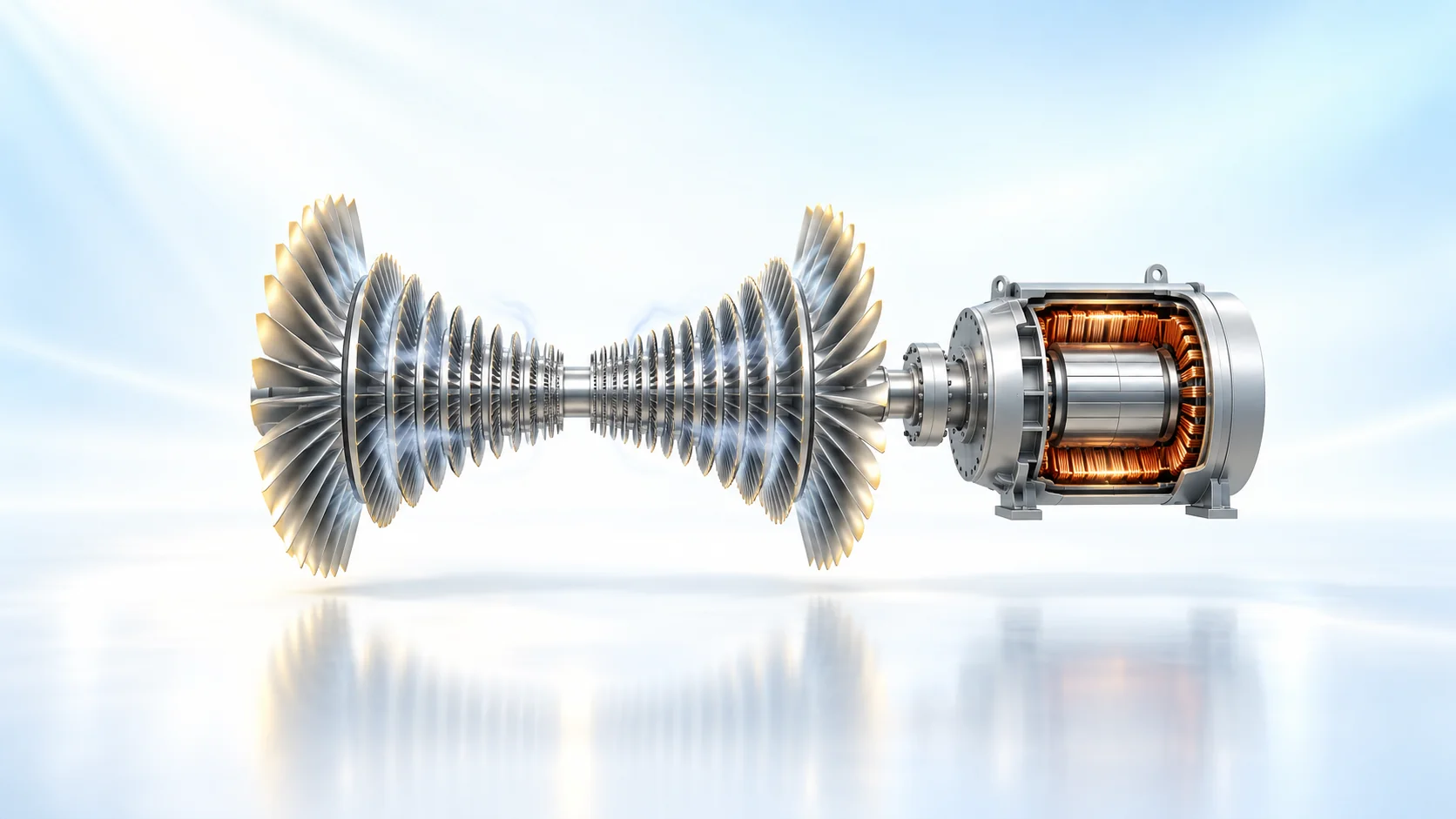
A Pinwheel and a Bike Light on One Shaft — How a Turbine Generator Makes Electricity
In the APR1400, steam expands through one high-pressure and three low-pressure turbines to blades 1.32 m long, and a 4-pole generator on the same shaft turns at 1,800 rpm to deliver 1,425 MW at 60 Hz by electromagnetic induction.
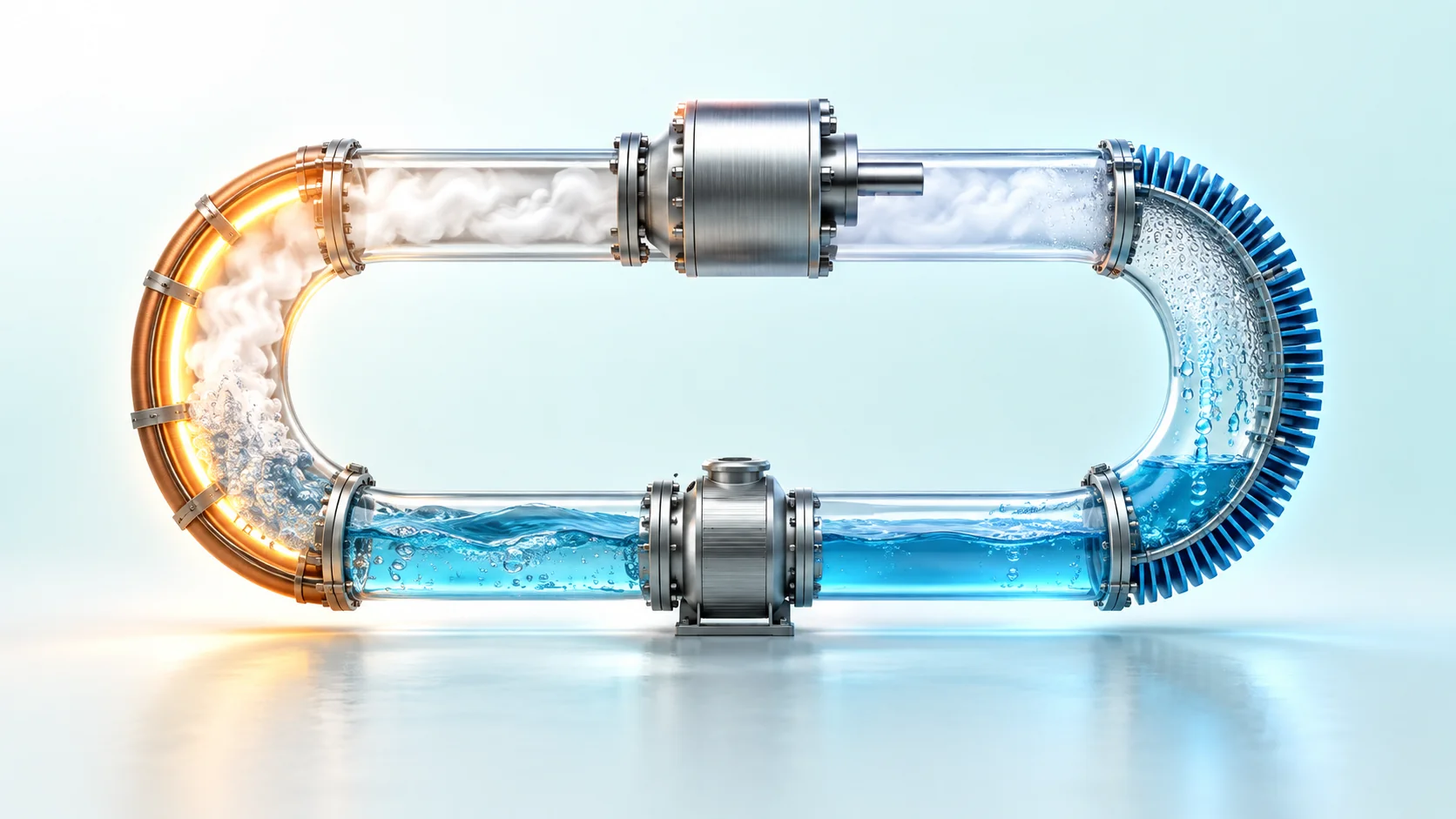
Four Stops on a Round Trip for 1 kg of Water — The Rankine Cycle That Drives a Nuclear Plant's Steam
In an ideal Rankine cycle between 6.9 MPa and 5 kPa, 1 kg of water takes in 2,629 kJ, the turbine delivers 1,000 kJ and the pump needs only 7 kJ, because condensed water has about 1/28,000 of the steam's volume.
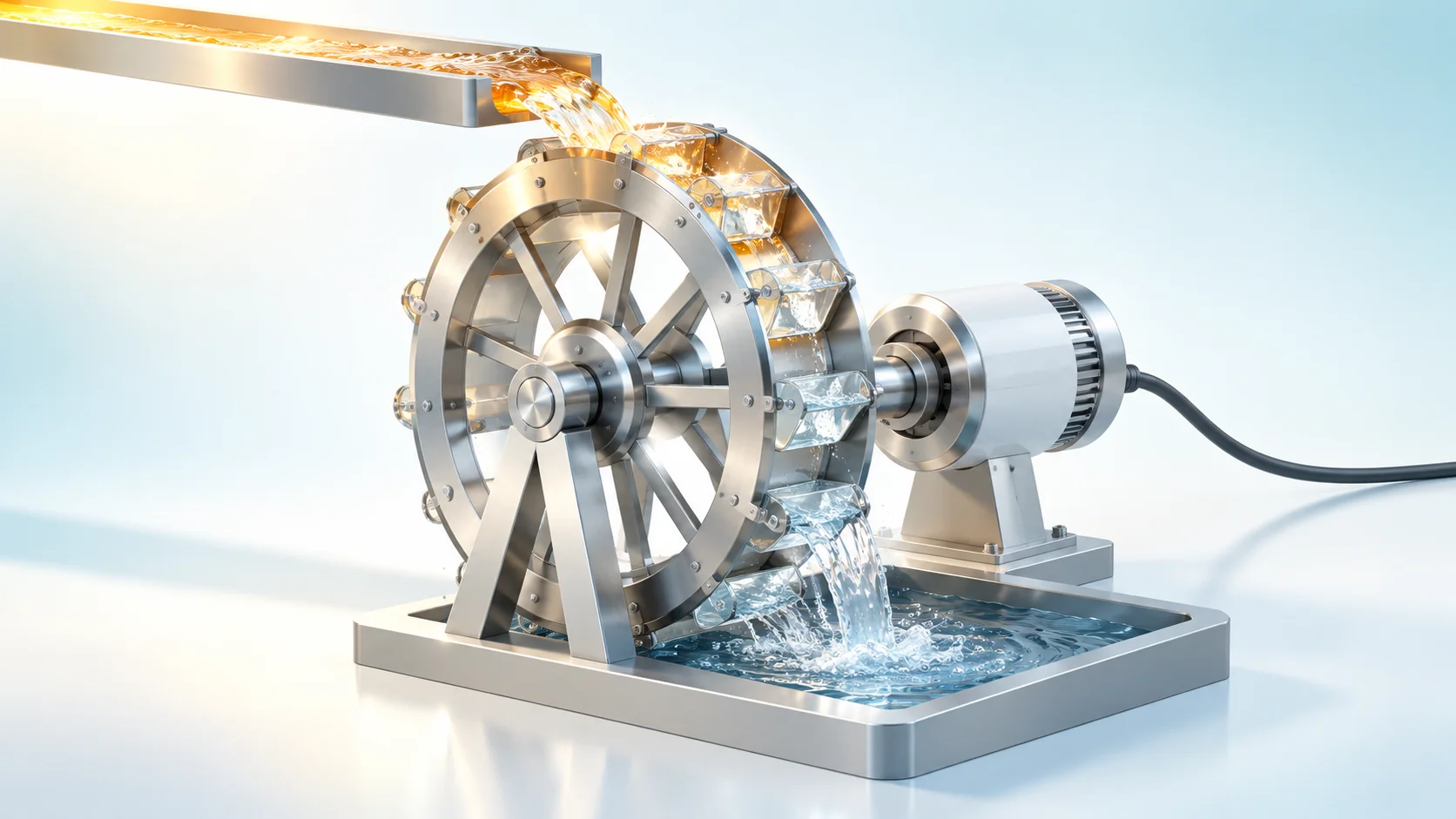
A Waterwheel Only Turns as Far as the Water Falls — Electric Output and Thermal Efficiency
An APR1400 turns 3,983 MW of reactor heat into about 1,400 MW of net electricity, about 35%, because every heat engine must reject heat to a cold side and PWR steam at about 285°C sets a lower ceiling than coal or gas plants.