CONCEPT DICTIONARY
Concept Dictionary
CONCEPT DICTIONARY
Concept Dictionary

Accident Management Plan (AMP) — scope, criteria and review
An AMP covers four accident categories — design basis, multiple failures, beyond-design external hazards and severe accidents — with prevention, mitigation, consequence and risk assessment, implemented through EOPs, extreme-hazard guidelines and SAMG.

ANS Condition I–IV — event classes and acceptance criteria
ANS Conditions I–IV class design-basis events by frequency and consequence; SRP 15.0 Rev. 3 maps them to AOO = II + III and postulated accident = IV, and each Condition must not escalate to a higher one.
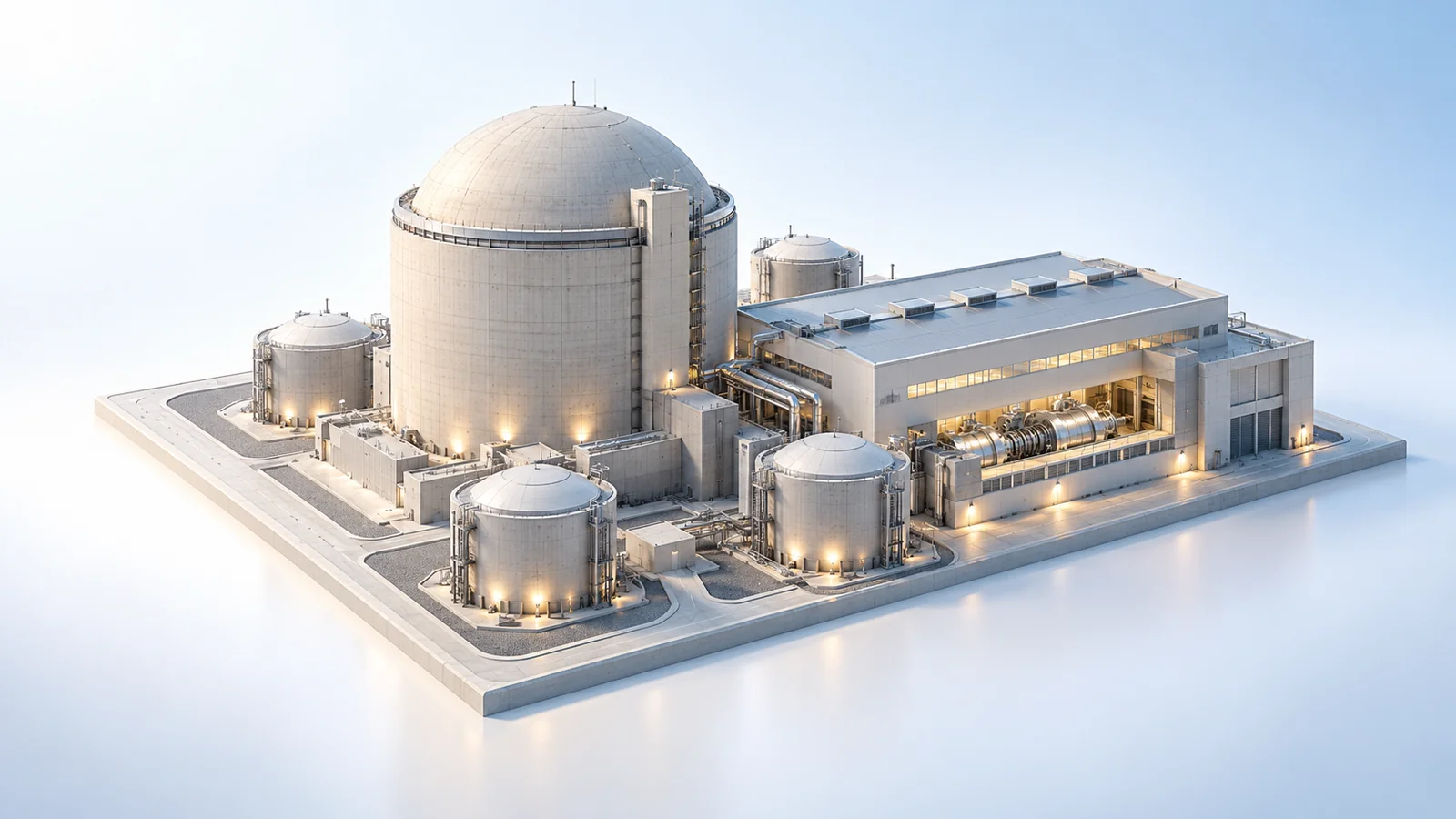
APR1400 Design Features — what changed from the OPR1000
The APR1400 keeps the OPR1000's two loops but moves to 3,983 MWt, 60 years, SSE 0.3 g, CDF below 10⁻⁵/RY, four-train direct vessel injection from an in-containment IRWST and a fully digital MMIS.
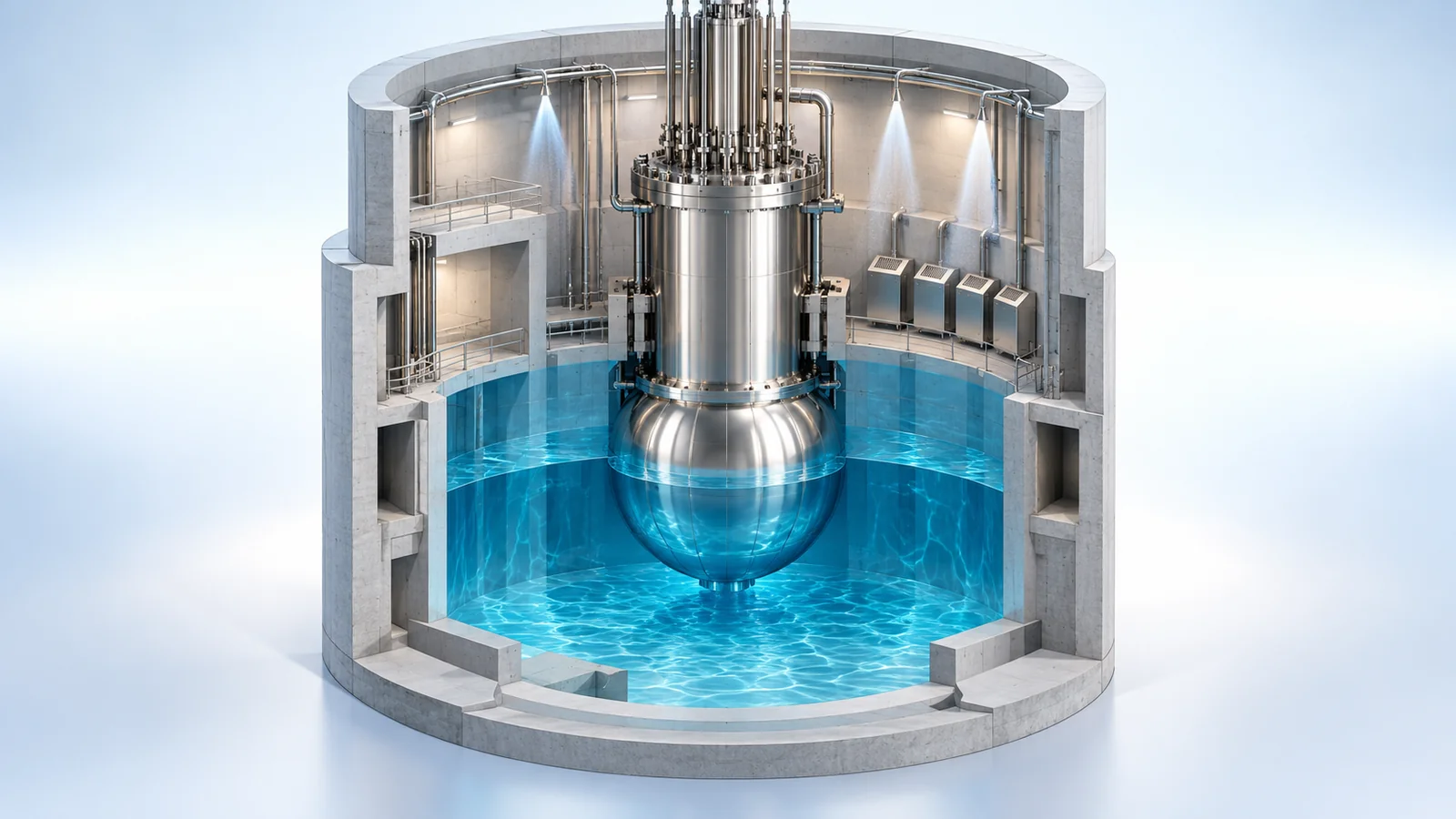
APR1400 severe accident features — prevention and mitigation by threat
APR1400 mitigation: POSRVs depressurize the RCS below 250 psia before vessel failure, 30 PARs and 10 igniters, gravity cavity flooding up to about 6.4 m, and an external-water spray backup.
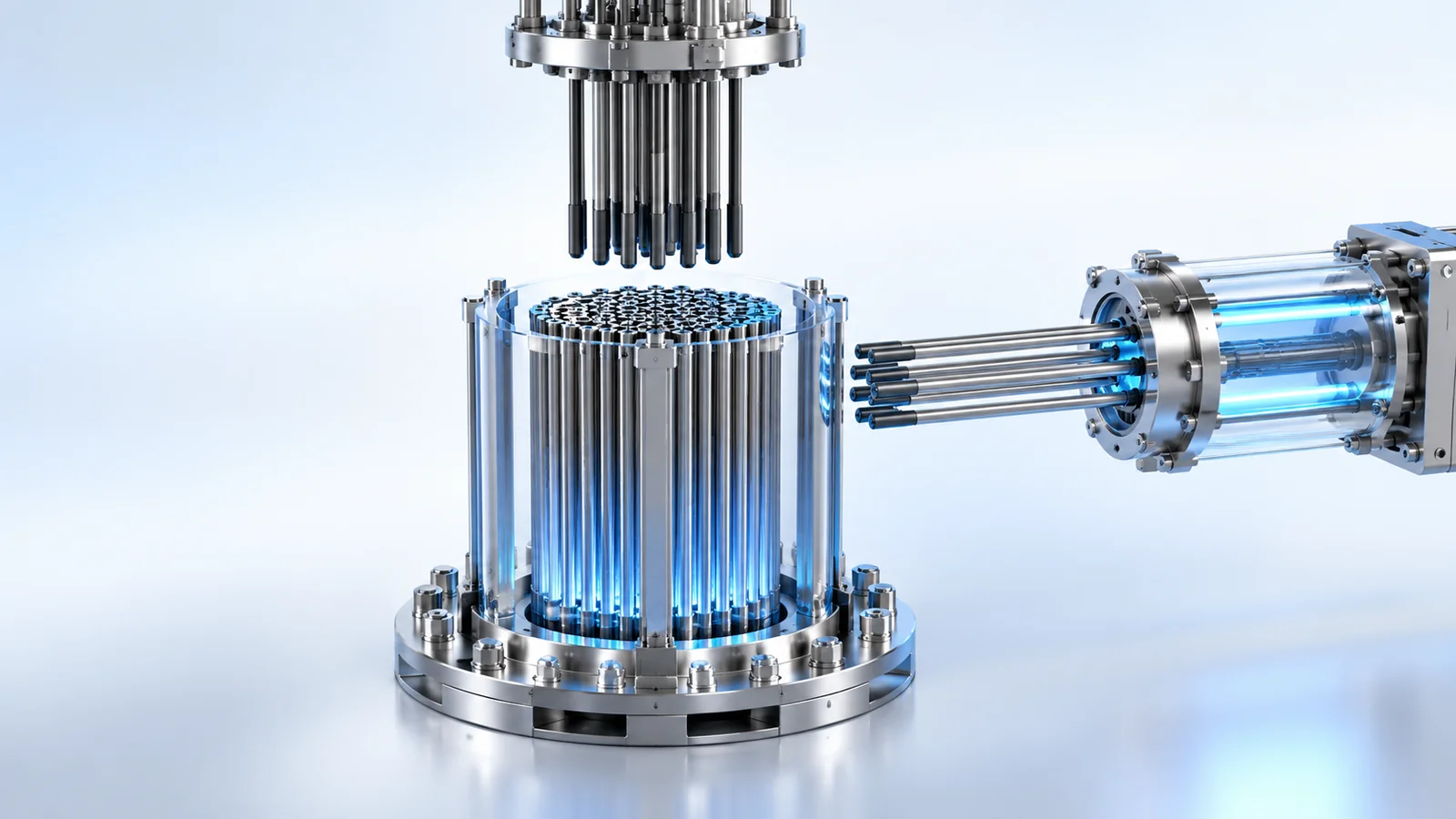
ATWS — peak pressure, MTC and UET, 10 CFR 50.62, AMSAC, DSS and DPS
In an ATWS the peak RCS pressure must stay below about 3,200 psig (22.06 MPa(g)); it depends mostly on the MTC, so the beginning of the cycle (UET) is the weak point, backed up by diverse turbine trip, auxiliary feedwater and reactor trip.
Axial power distribution and ASI — AO, ΔI and the sign trap
AO = (P_T − P_B)/(P_T + P_B) and ASI = (P_B − P_T)/(P_B + P_T) = −AO; in a chopped-cosine model F_Z rises from 1.44 at ASI 0 to 1.61 at |ASI| 0.30.

Binding Energy per Nucleon — Ni-62 peak, fission and fusion
B/A is largest for Ni-62 (8.795 MeV) and U-235 sits at 7.59 MeV; S_n = 6.55 MeV exceeds the 5.3 MeV barrier for U-236 but S_n = 4.81 MeV falls short of 5.5 MeV for U-239.

Boiling curve — regime correlations, pressure and flow effects
For water at 1 atm, CHF is about 1.26 MW/m² at ΔTe ≈ 21 K and the Leidenfrost minimum about 0.019 MW/m² at ΔTe ≈ 73 K; at 15.5 MPa nucleate superheat falls from 19.3 to 4.5 K.
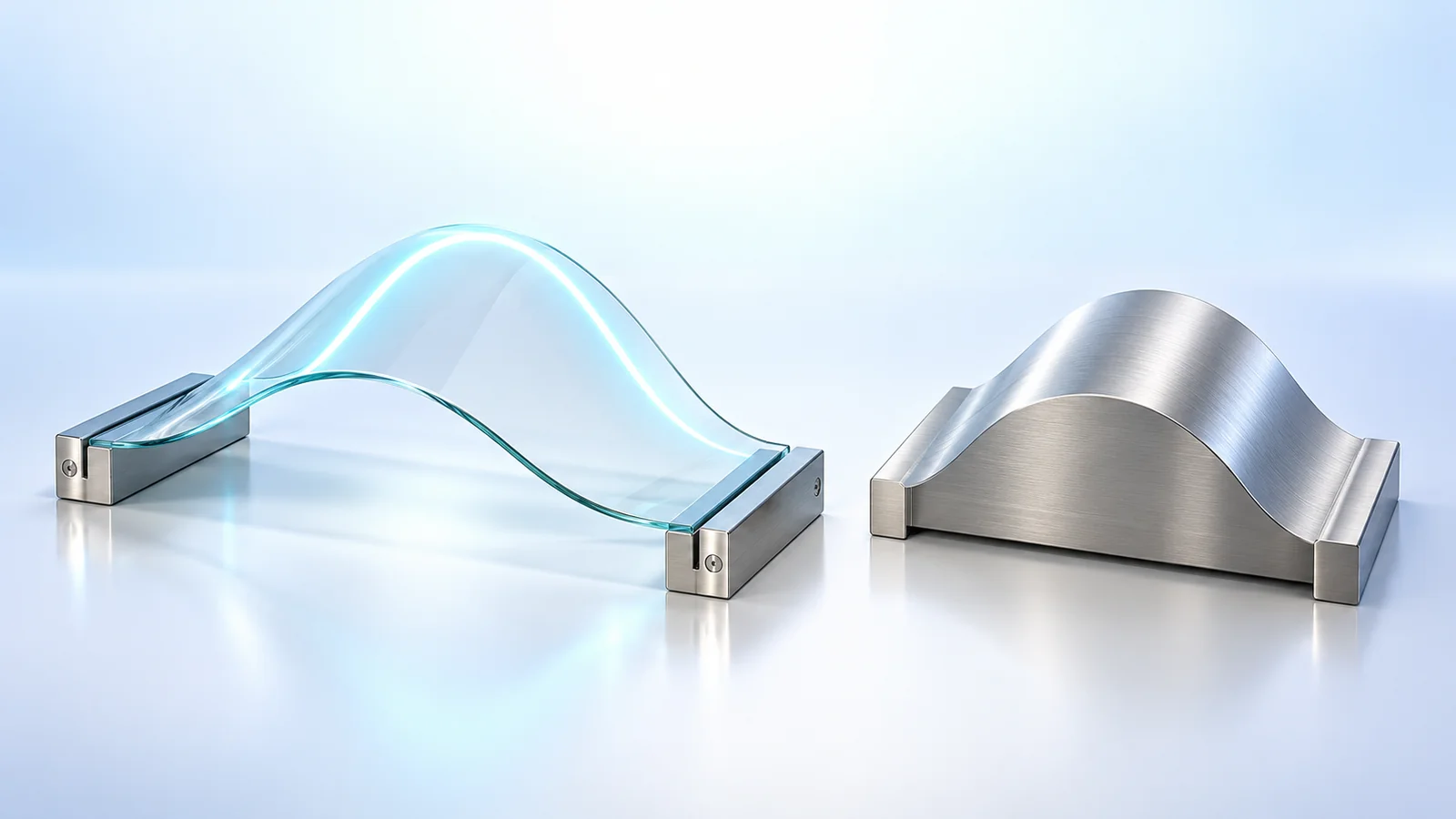
Buckling — material vs geometric, critical radius and critical mass
B_m² = (k∞ − 1)/L² (or M²) and B_g² from the shape, e.g. (2.405/R)² + (π/H)²; setting them equal gives a critical radius of 21.0 cm in a cylindrical worked example and 2.56 t of natural uranium in a heavy-water example.

Burnup — MWd/tU, %FIMA and EFPD conversions
Burnup divides released energy by the initial heavy-metal mass (not the UO₂ mass); 1 MWd ≈ 2.70×10²¹ fissions and 1 %FIMA ≈ 9.4 GWd/tHM.
No concepts yet.