Nuclear Theory archive — page 18
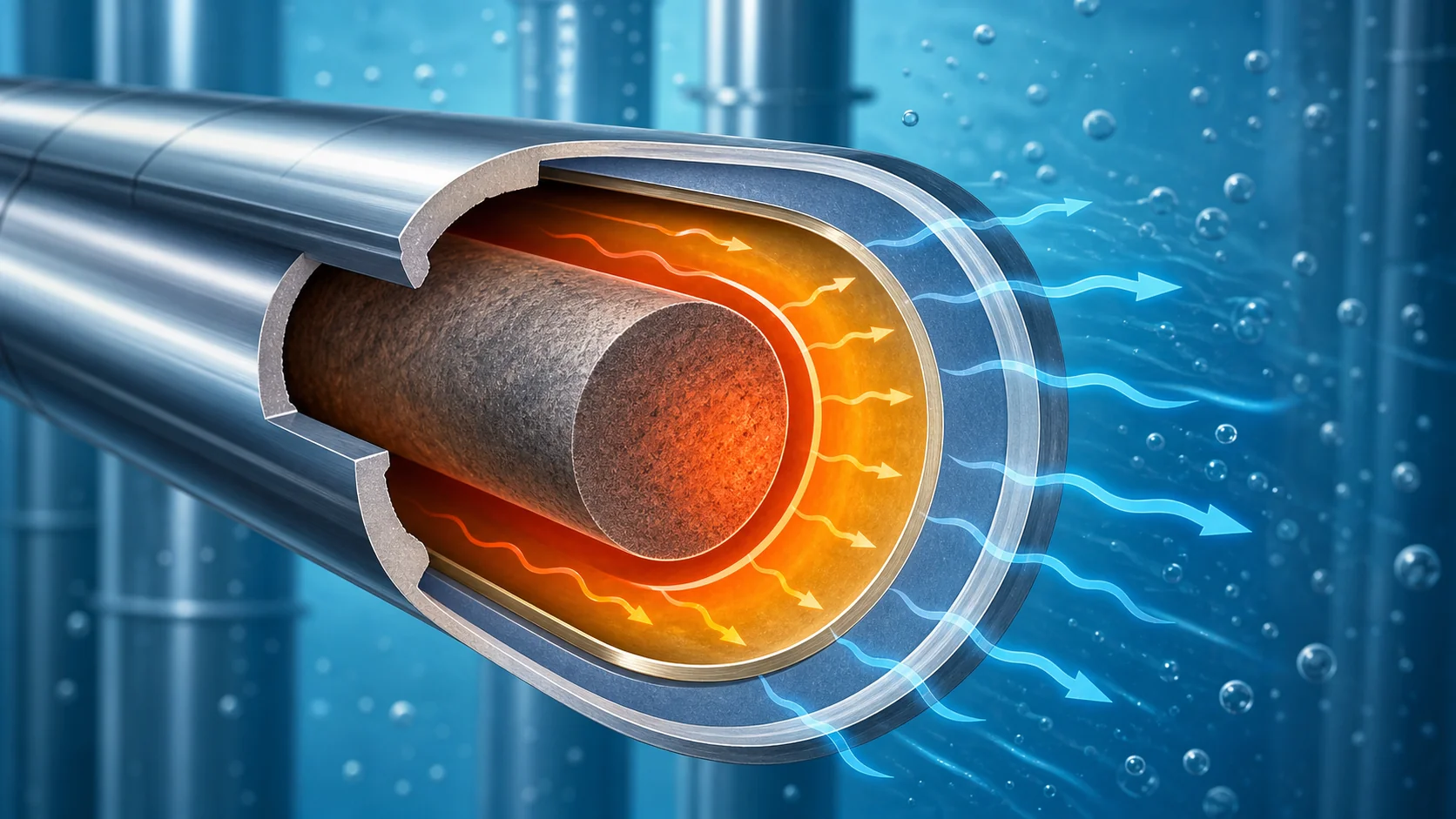
The More Layers You Wear, the Colder the Outside — Heat Flow Through the Gap and Cladding
Heat from a fuel pellet reaches the coolant by crossing the gas gap and the cladding, and with nearly the same heat flux through each layer, the temperature drop ΔT ≈ q″ × Δx ÷ k is largest where conductivity is low, which is why the thin helium-filled gap can take an unusually large drop.
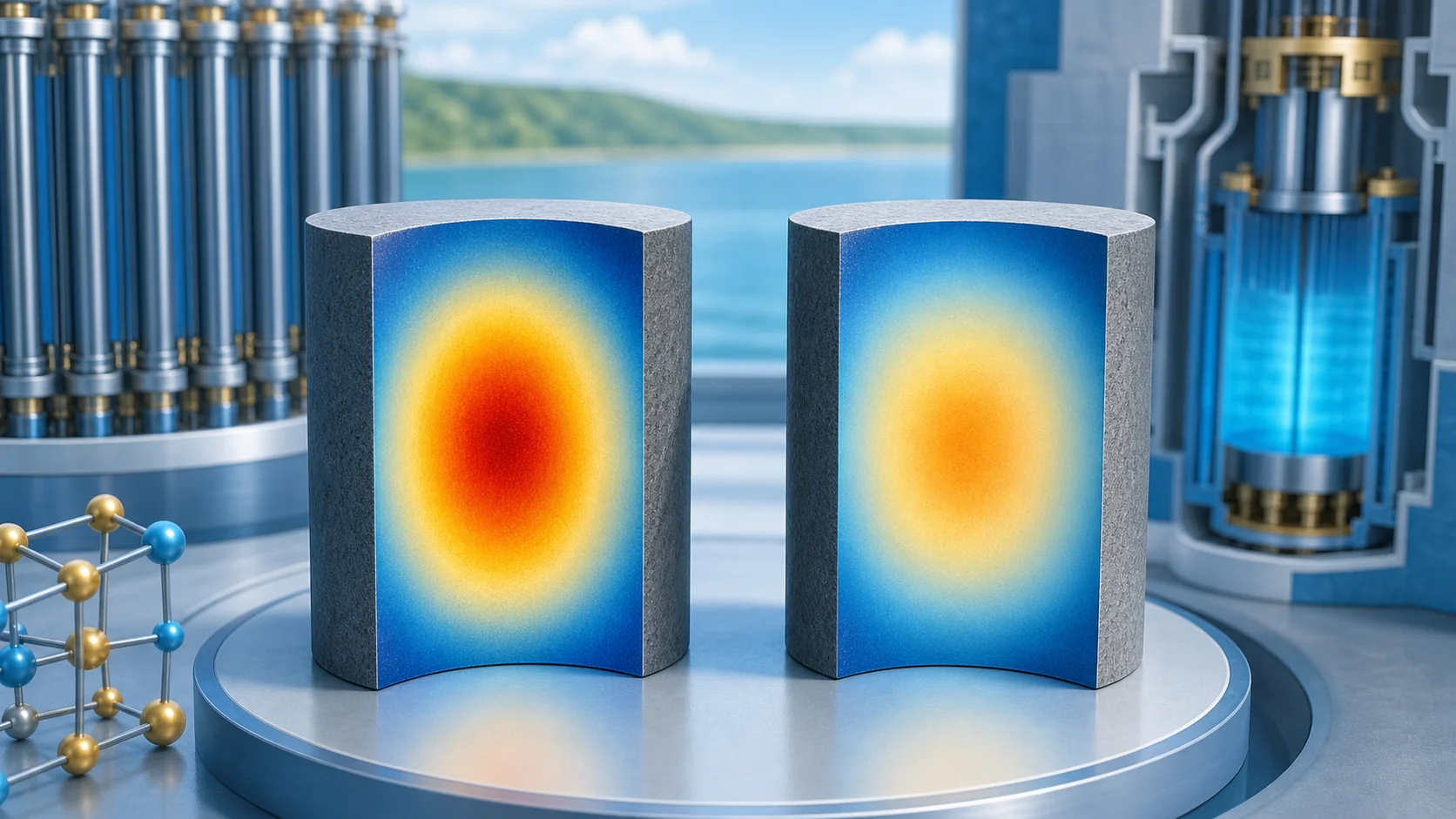
Wide Straw, Narrow Straw — Why Thermal Conductivity Sets Fuel Temperature
The center-to-surface temperature difference of a fuel pellet, ΔT = (q‴ × R²)/(4k), is inversely proportional to thermal conductivity, so ceramic UO₂ fuel, a poor conductor compared with metals, runs a much hotter center than its surface.
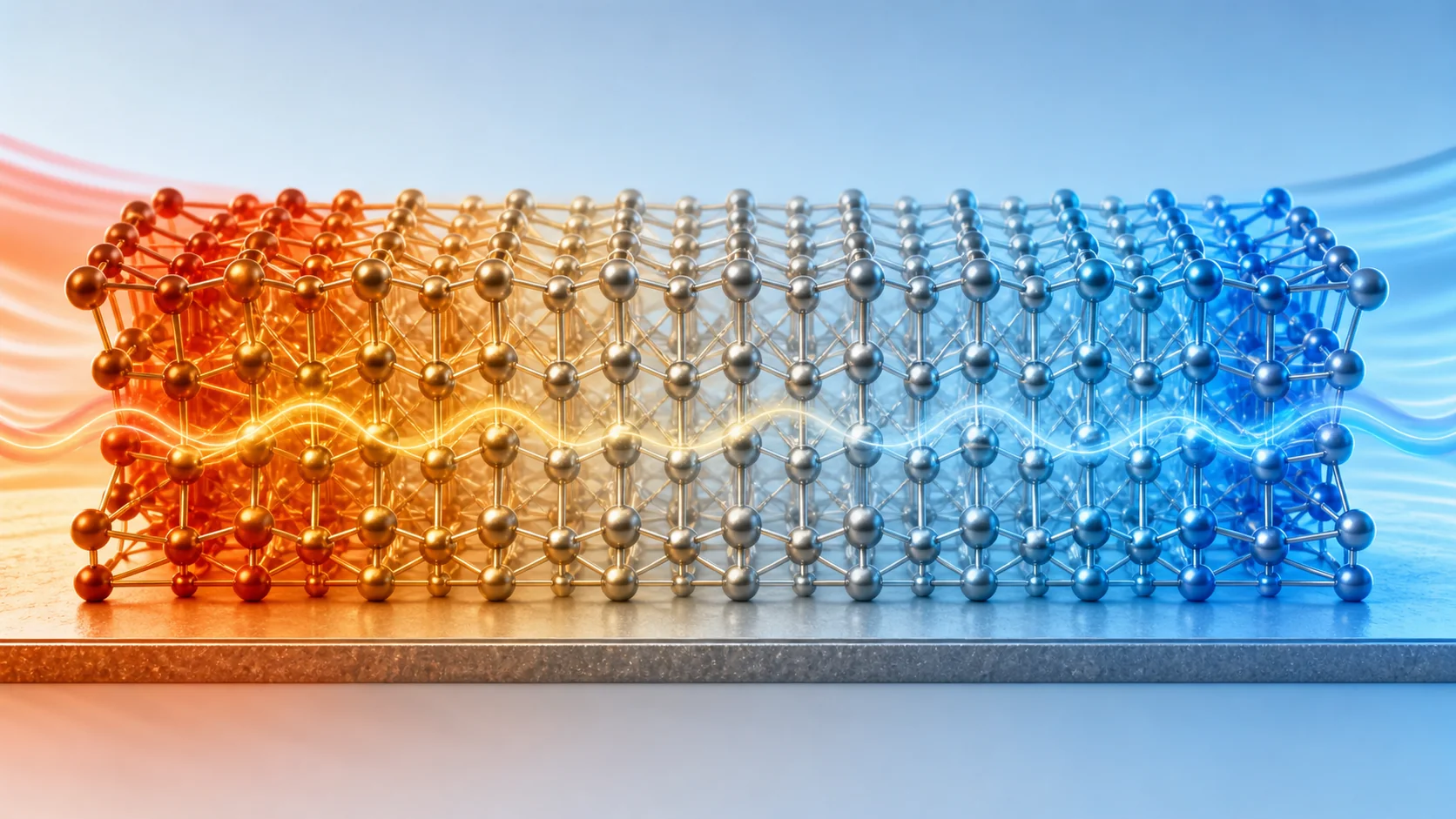
The Bucket Moves, the People Don't — How Heat Conduction Carries Heat
Heat conduction moves energy from particle to particle while the material itself stays in place, as described by Fourier's law q″ = −k × (dT/dx), and in a reactor it carries heat from inside the fuel through the cladding before convection takes over.
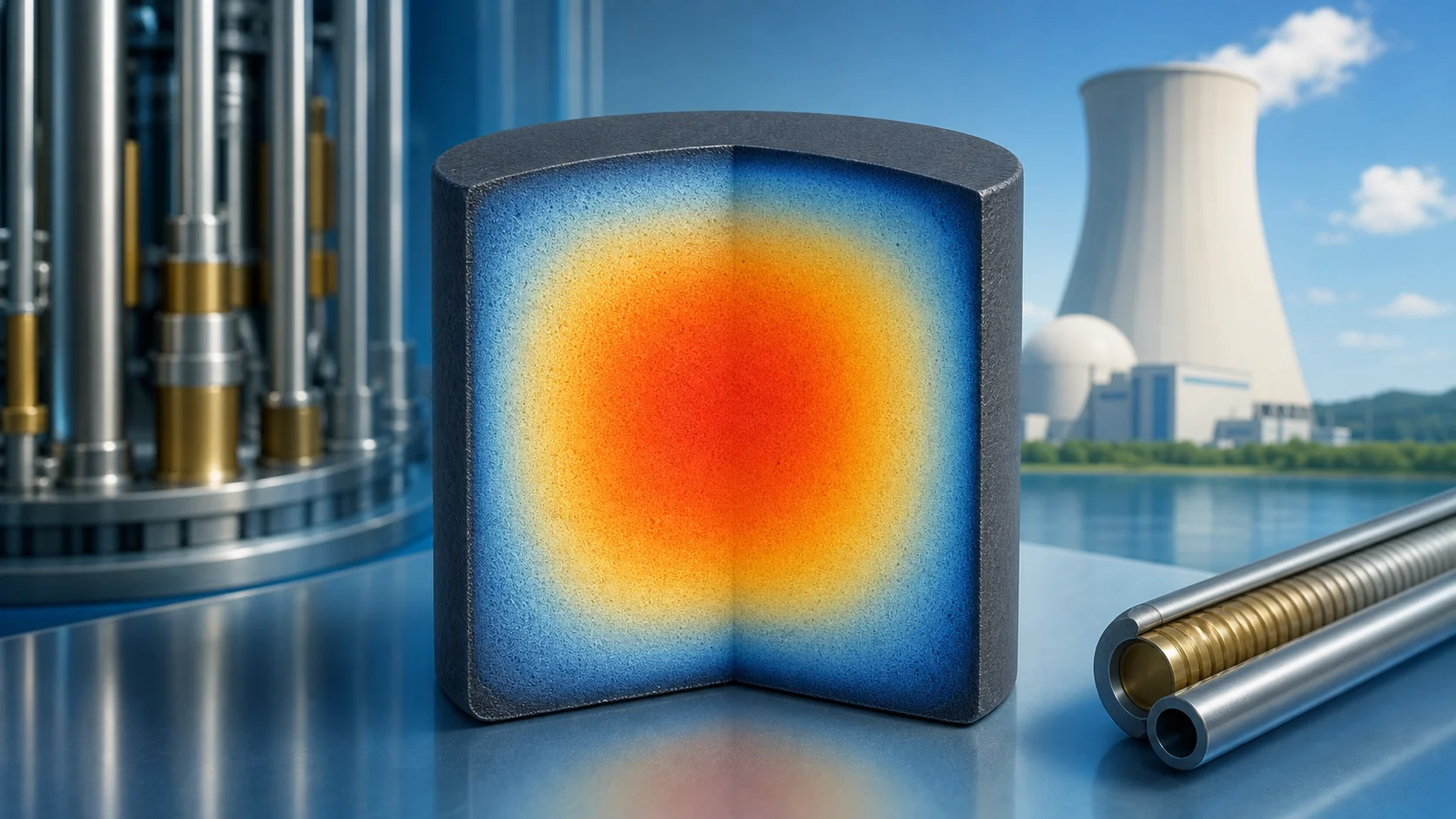
Why a Campfire Ember Stays Hot Inside — The Temperature Profile of a Fuel Pellet
Because heat is generated almost evenly inside a fuel pellet but escapes only through its surface, temperature follows a parabola, T(r) = T_surface + (q‴/4k)(R² − r²), peaking at the center, which must stay well below the fuel's melting point.
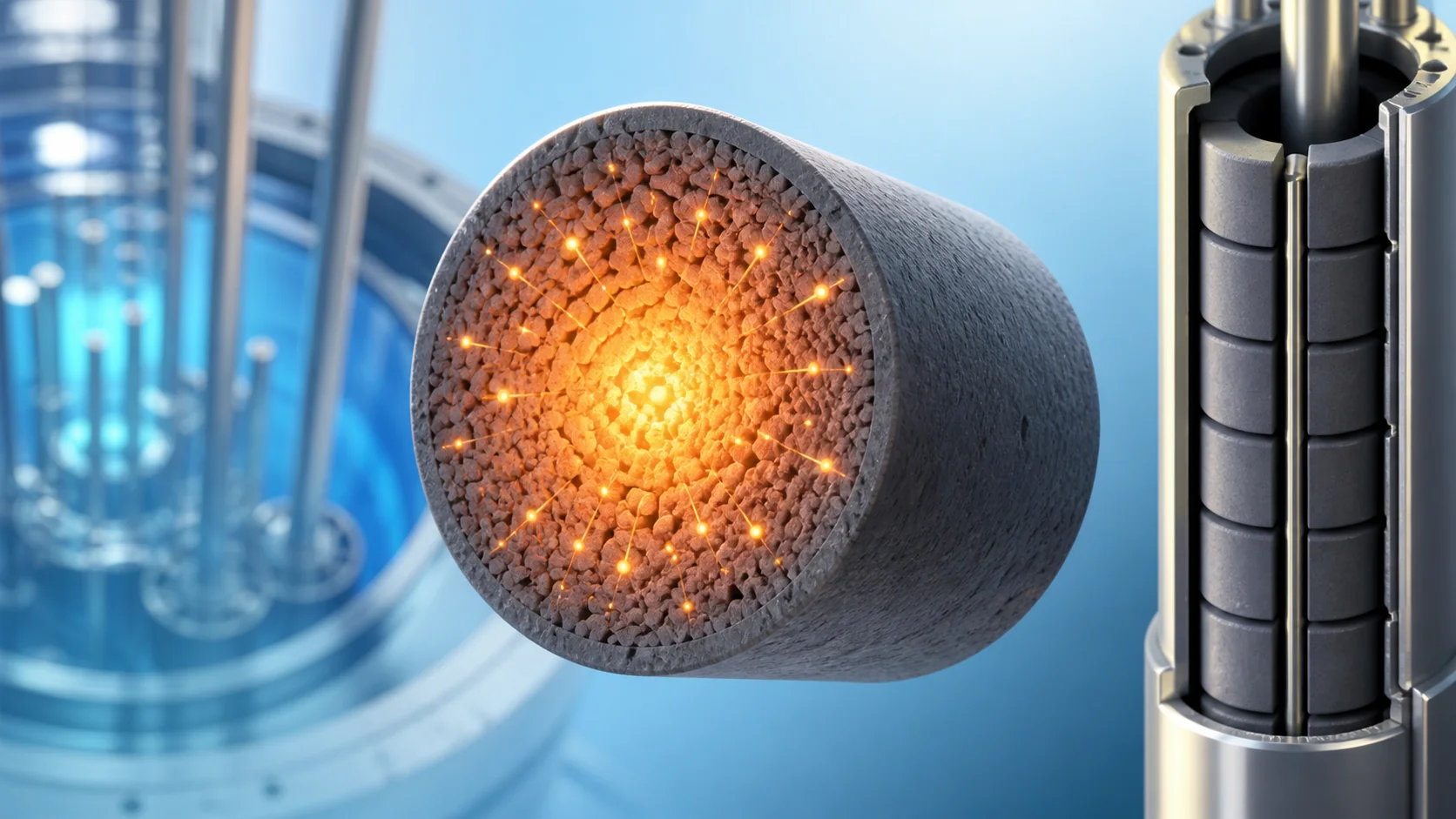
More Microwave Than Oven — Where Fission Heat Is Born
Roughly 80% or more of the about 200 MeV released per fission is fragment kinetic energy, and because the fragments stop within a few micrometers, fission heat is born throughout the inside of the fuel pellet, not delivered from outside.

Push It Over and It Pops Right Back Up — When a Reactor Stabilizes Itself
With Δρ ≈ α_P × ΔP, a negative power coefficient (α_P < 0) means any rise or fall in power produces reactivity that opposes it, which is why commercial reactors are designed to keep the power coefficient generally negative.

When Orders Pour In, the Conveyor Speeds Up — Load-Following Operation and Reactivity Control
Load following moves reactor power with daily demand by keeping ρ_rods + ρ_boron + ρ_feedback = 0 at each new power level, using control rods for fast changes and boron for slow ones, within limits set by thermal stress, xenon and axial power distribution.

Why the Shower Keeps Swinging Hot and Cold — and Why Xenon Oscillations Happen in a Reactor
Iodine-135 (half-life about 6.6 hours) turns into neutron-absorbing xenon-135 only hours later, so in large, weakly coupled cores power can swap between top and bottom with a period of roughly 15–30 hours, a predictable behavior handled by monitoring and control rods.

How You Feel Is a Sum, Not a Single Reading — The Power Coefficient and the Fuel Temperature Coefficient
The power coefficient (α_P = dρ/dP) sums the Doppler, moderator temperature and void feedback that act simultaneously when power changes, and the fuel temperature (Doppler) coefficient is one component of it, often the first to show up.

One Recipe Wants Foam, the Other Bans It — Why the Void Coefficient Differs by Reactor Type
Under-moderated design keeps the void coefficient negative in both PWRs and BWRs, but a BWR (core-average void roughly in the 40% range) uses recirculation flow to steer power with it, while a PWR keeps voids near zero and must also manage the offset from dissolved boron.