Nuclear Theory archive — page 30

Why Radon Is an Indoor Air Problem
Radon from the soil collects in poorly ventilated rooms, its short-lived decay products deliver alpha doses to the airways, and long-term measurement plus steady ventilation are the simple remedies.

Half-Life Explained with a Coin-Toss Elimination Game
A half-life is the time for half of the remaining radioactive atoms to decay: two half-lives leave 25%, ten leave about 1/1000, and values range from 164 microseconds to 4.5 billion years.
If It's Light, Why Does It Click? — Gamma Rays: Particle or Light?
A gamma ray is a chargeless, massless photon emitted by an excited nucleus; the 0.662 MeV gamma of the cesium-137 chain carries about 330,000 times the energy of a visible-light photon.

A Force That Only Works When Touching, Like Velcro — How the Nuclear Force Beats Electric Repulsion
The nuclear force attracts strongly only at about 0.8–2 fm and acts between neighbors, while Coulomb repulsion reaches every proton pair, 4,186 pairs in uranium, so bigger nuclei need more neutrons.

The Universe's Currency Exchange — What E=mc² Really Does in Nuclear Power
E=mc² sets one fixed exchange rate between mass and energy for every reaction; fission converts about 0.09% of its mass, so 1 g of uranium-235 gives about 1 MW·day, the same as about 3 tonnes of coal.

Just Two Ingredients — Protons and Neutrons, the Building Blocks of the Nucleus
A nucleus is built from Z protons and N neutrons (A = Z + N), each about 1 u and made of three quarks, packed so tightly that the radius grows only as the cube root of A.

A Pea Inside a Skyscraper — Why the Atom Is Mostly Empty Space
The nucleus is only 1/10,000 to 1/100,000 of an atom's diameter but holds more than 99.9% of its mass, a fact revealed when about 1 in 8,000 alpha particles bounced back in 1909.

The Nucleus Gets a Bulk Discount — Mass Defect and Binding Energy
An assembled nucleus always weighs less than its separate protons and neutrons, and that missing mass, about 0.75% for helium-4, is the binding energy that explains why both fission and fusion release energy.
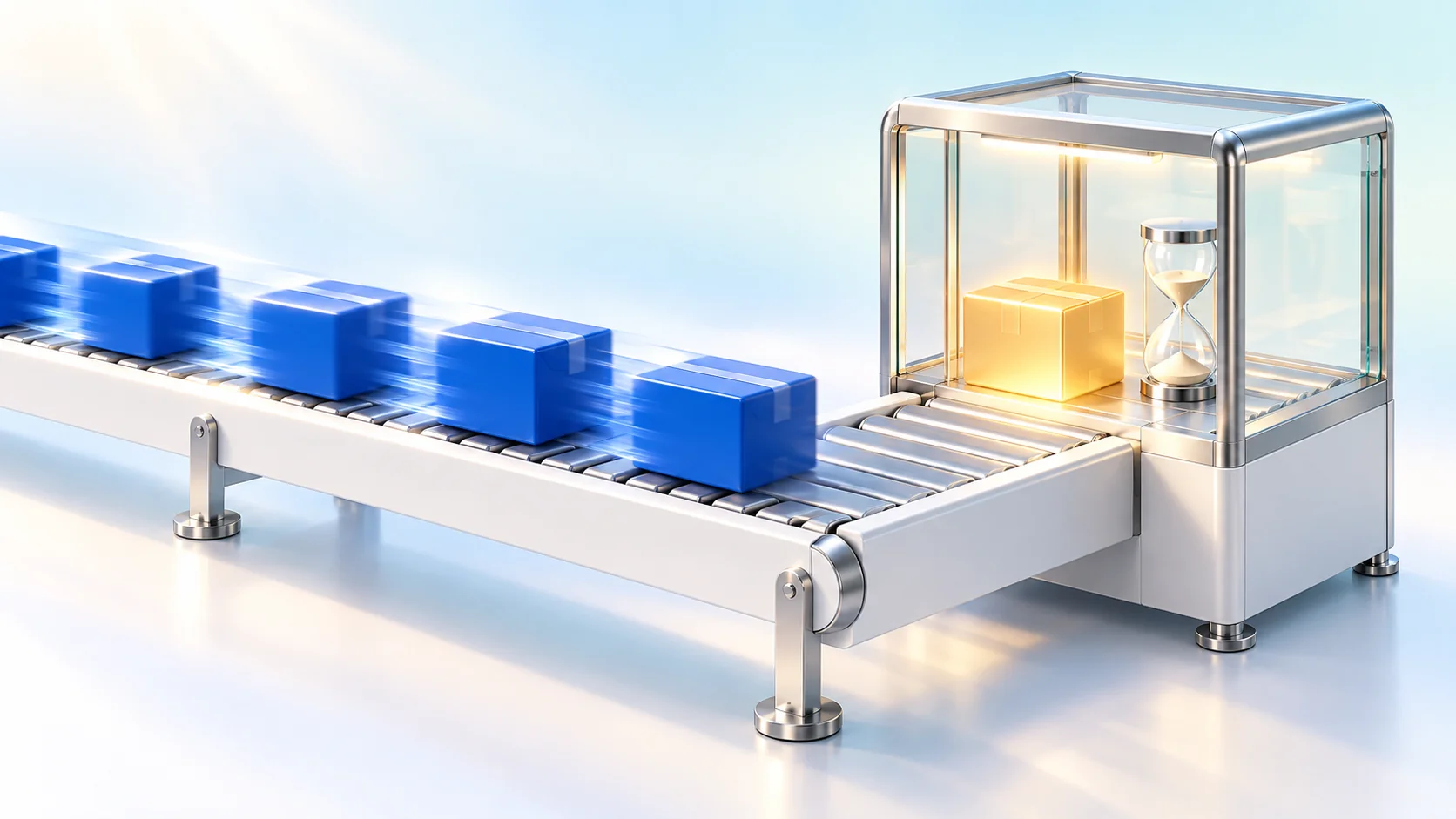
Ships Now or Ships Later — Prompt and Delayed Neutrons
Almost all fission neutrons are prompt, but about 0.65% are delayed by the beta decay of precursor nuclides such as bromine-87, which are grouped into six half-life groups from 0.23 to 55.7 seconds.
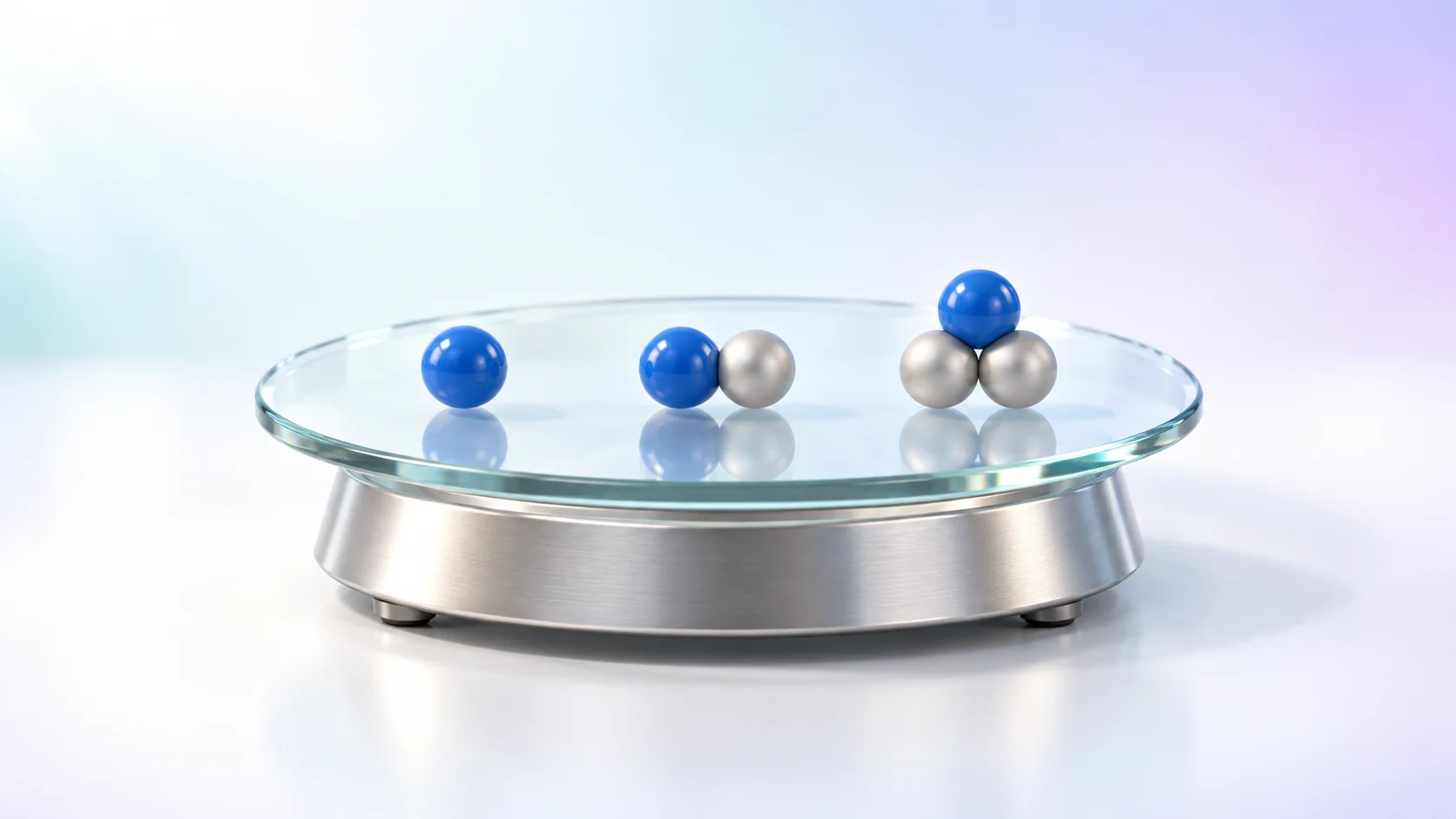
Same Face, Different Weight Class — Why Isotopes Behave Differently
Isotopes have the same protons but different neutrons, so U-235 (0.72% of natural uranium) splits readily while U-238 hardly does, and deuterium absorbs about 1/650 as many neutrons as ordinary hydrogen.