Nuclear Theory archive — page 17
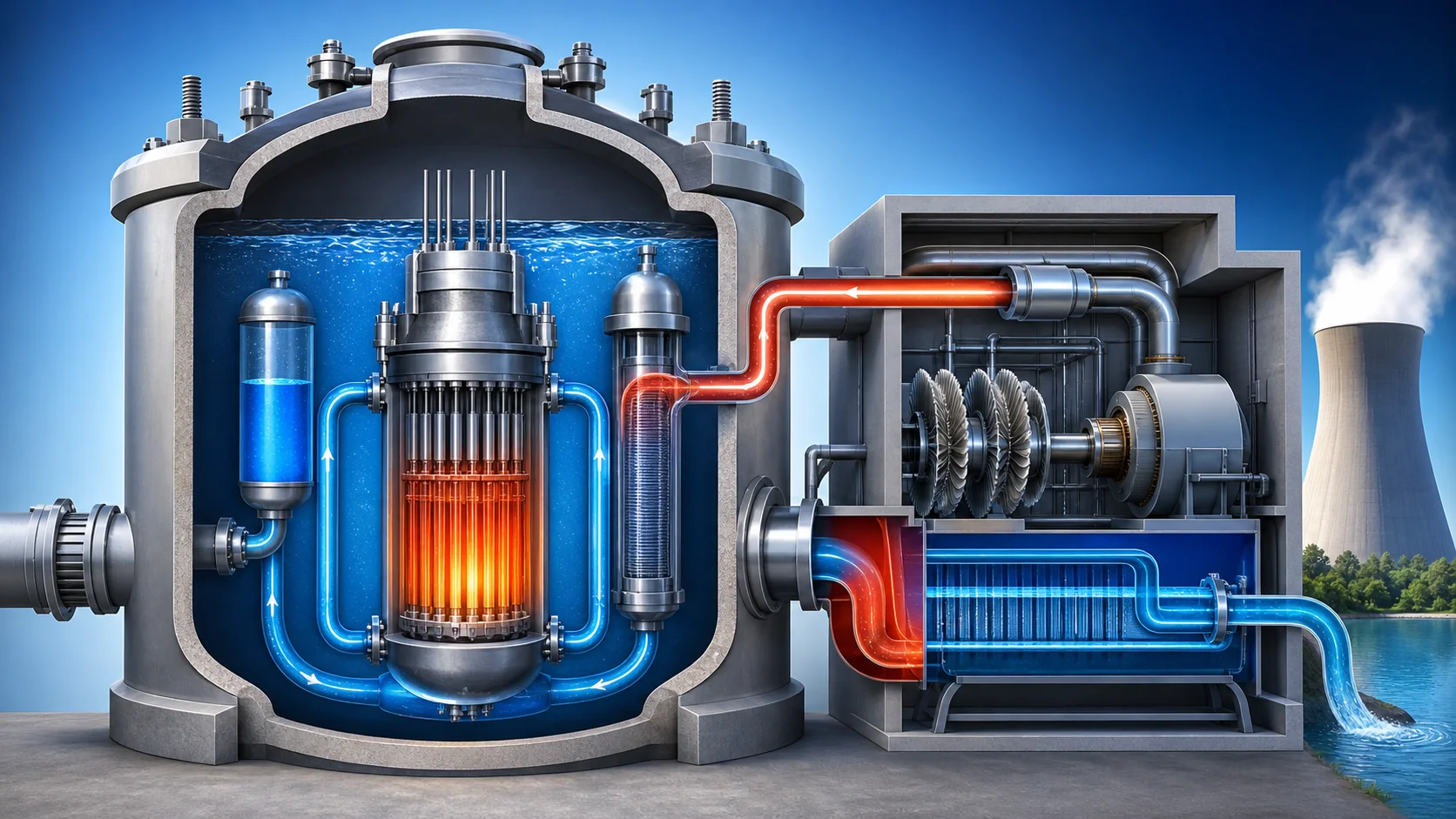
Turning the Whole Reactor into a Pressure Cooker — Why PWRs Run at High Pressure
A PWR holds its primary coolant at around 15.5 MPa, raising water's boiling point to about 345°C so coolant at roughly 290 to 330°C stays liquid, a pressure chosen as a compromise between boiling margin and equipment cost.

On a High Mountain, Water Boils Too Soon — Pressure and Boiling Point
Water's boiling point is the saturation temperature for its pressure, about 70°C near Everest's summit, 100°C at sea level, about 120°C in a pressure cooker and about 345°C at a PWR's roughly 15.5 MPa.

Good Drivers Don't Tailgate — Thermal Margin
Thermal margin is the gap between a reactor's operating heat flux and the critical heat flux, measured as DNBR and judged at the minimum spot (MDNBR), kept on purpose to cover uncertainty and transients.
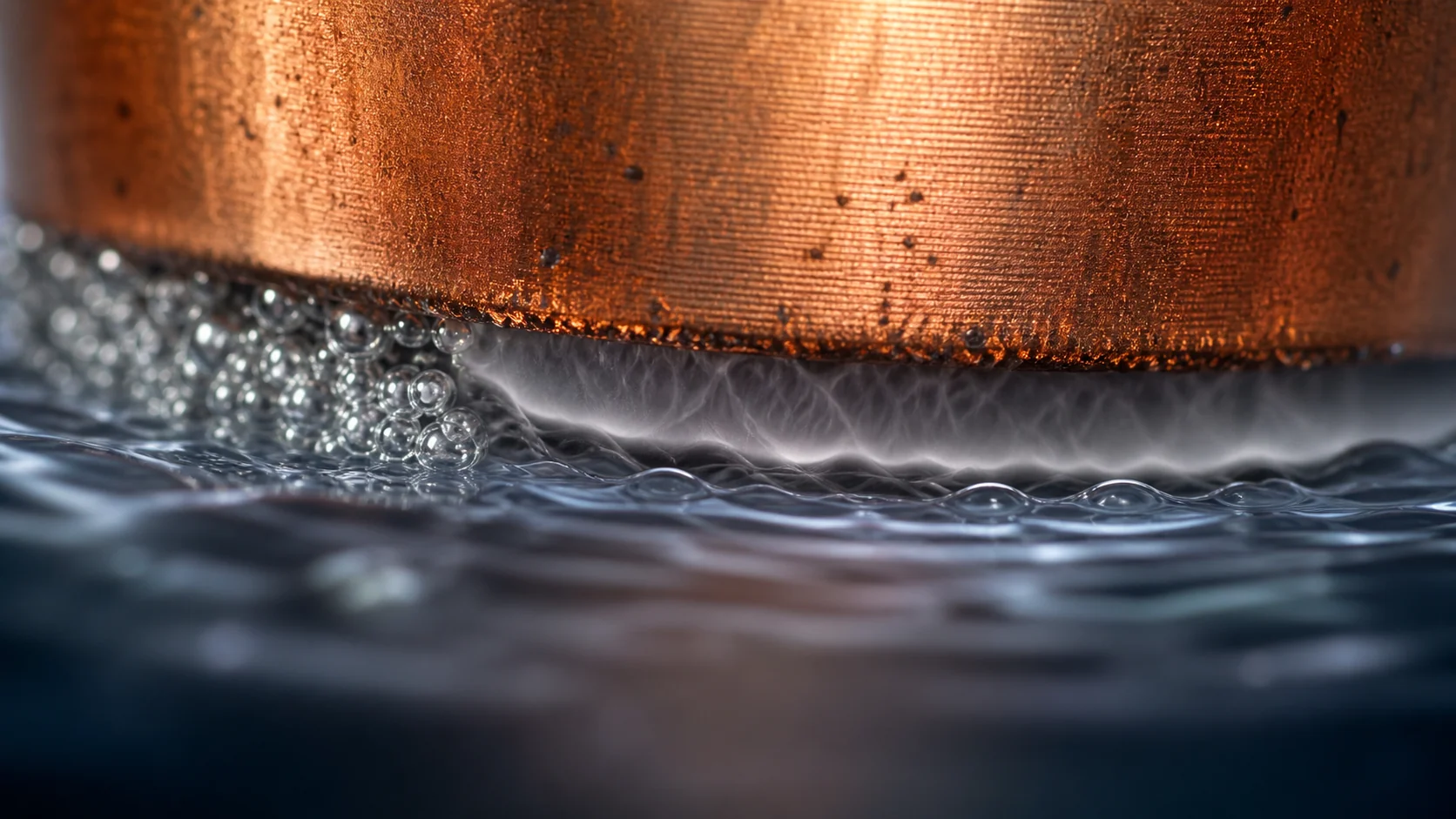
The Moment Your Tires Float — Why Reactors Must Avoid DNB
DNB is the sudden collapse of nucleate boiling on the fuel cladding, after which the cladding temperature shoots up, so reactors keep enough DNBR margin that it occurs nowhere in the core in normal operation or anticipated transients.

When the Dam Gauge Creeps Toward the Red Line — Critical Heat Flux (CHF)
Critical heat flux is the maximum heat flux at which nucleate boiling can be sustained, a condition-dependent threshold estimated with correlations, and reactors keep the margin to it, tracked as DNBR and MDNBR, under design limits and real-time protection.
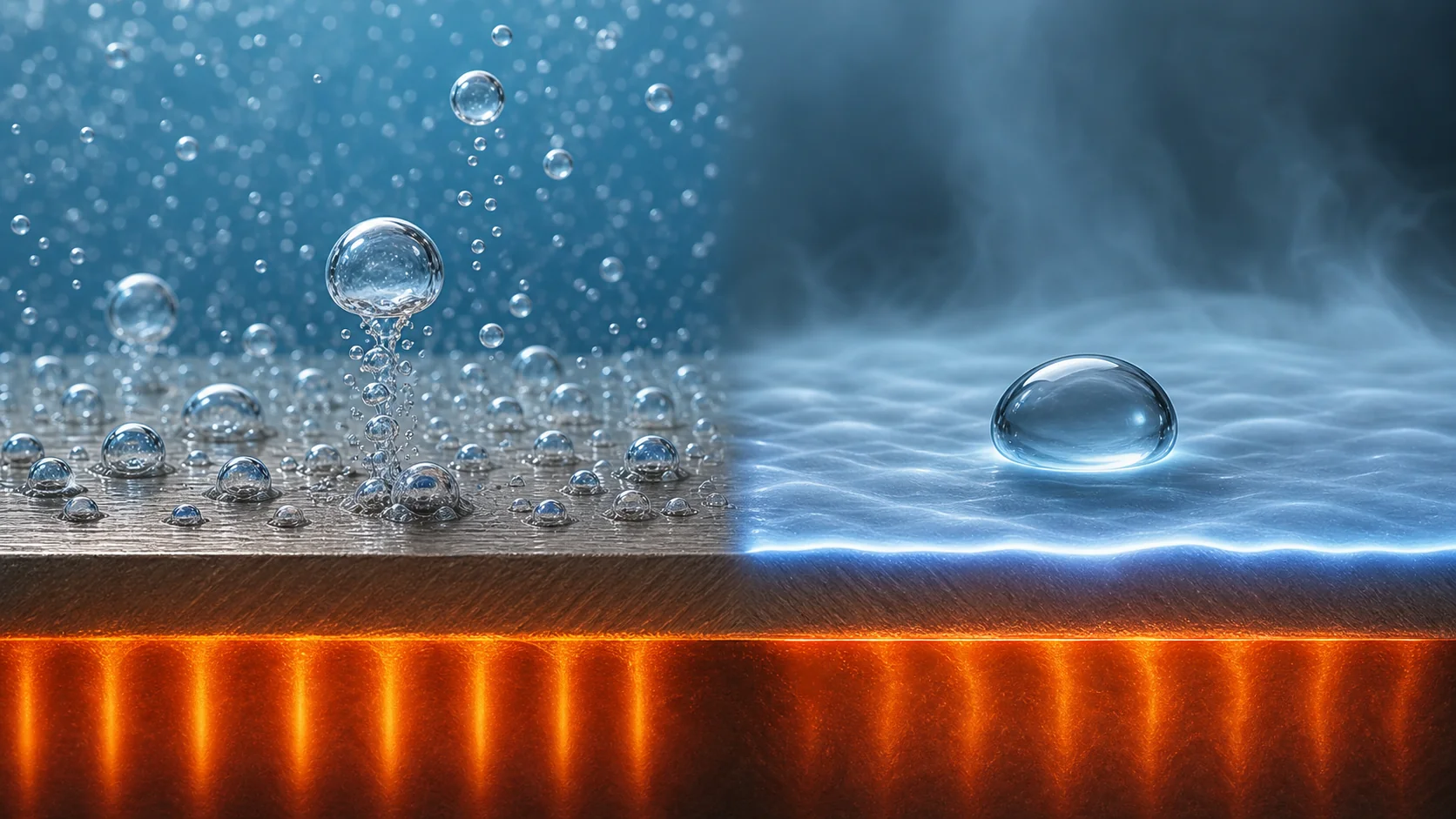
The Water Drop That Should Have Fizzled but Dances Instead — Nucleate vs Film Boiling
In nucleate boiling, bubbles form and leave while liquid keeps touching the surface, boosting heat transfer; in film boiling, merged bubbles form a vapor film that insulates the surface, which is why reactors use the first and are designed to avoid the second.
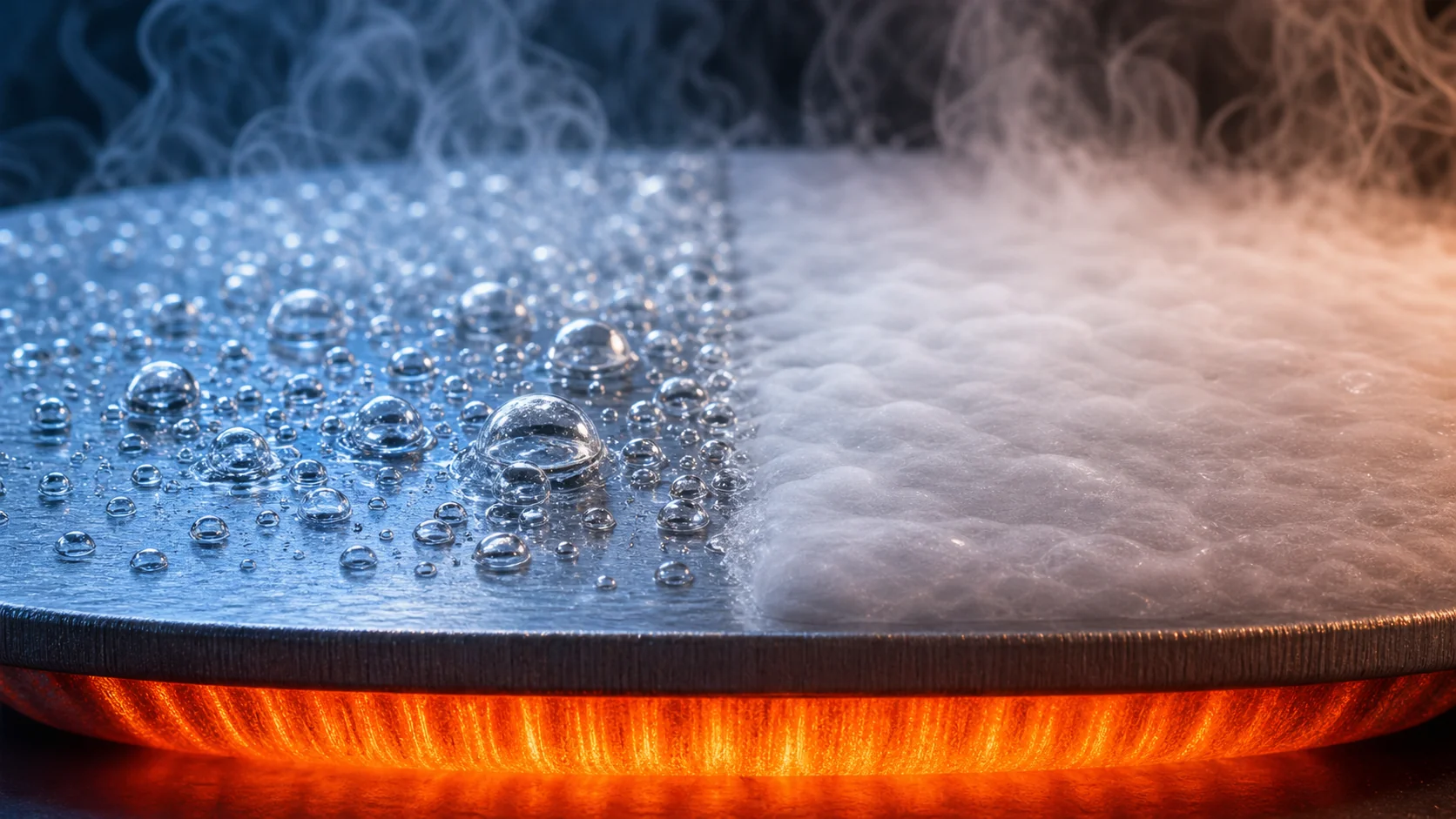
While the Pressure Cooker Vents Politely — Is Boiling Good or Bad?
Nucleate boiling raises the heat transfer coefficient through latent-heat transport and bubble stirring, but past the critical heat flux (CHF/DNB) a vapor film insulates the surface, so plants keep a thermal margin to that boundary.

What Is That Sticker on the Window Really Measuring? — The Heat Transfer Coefficient Explained
The heat transfer coefficient h, in W/(m²·K), rates how well a surface-to-fluid boundary passes heat: by Newton's law of cooling a larger h needs a smaller temperature difference, and unlike the material property k it changes with flow speed, fluid type and boundary-layer thickness.
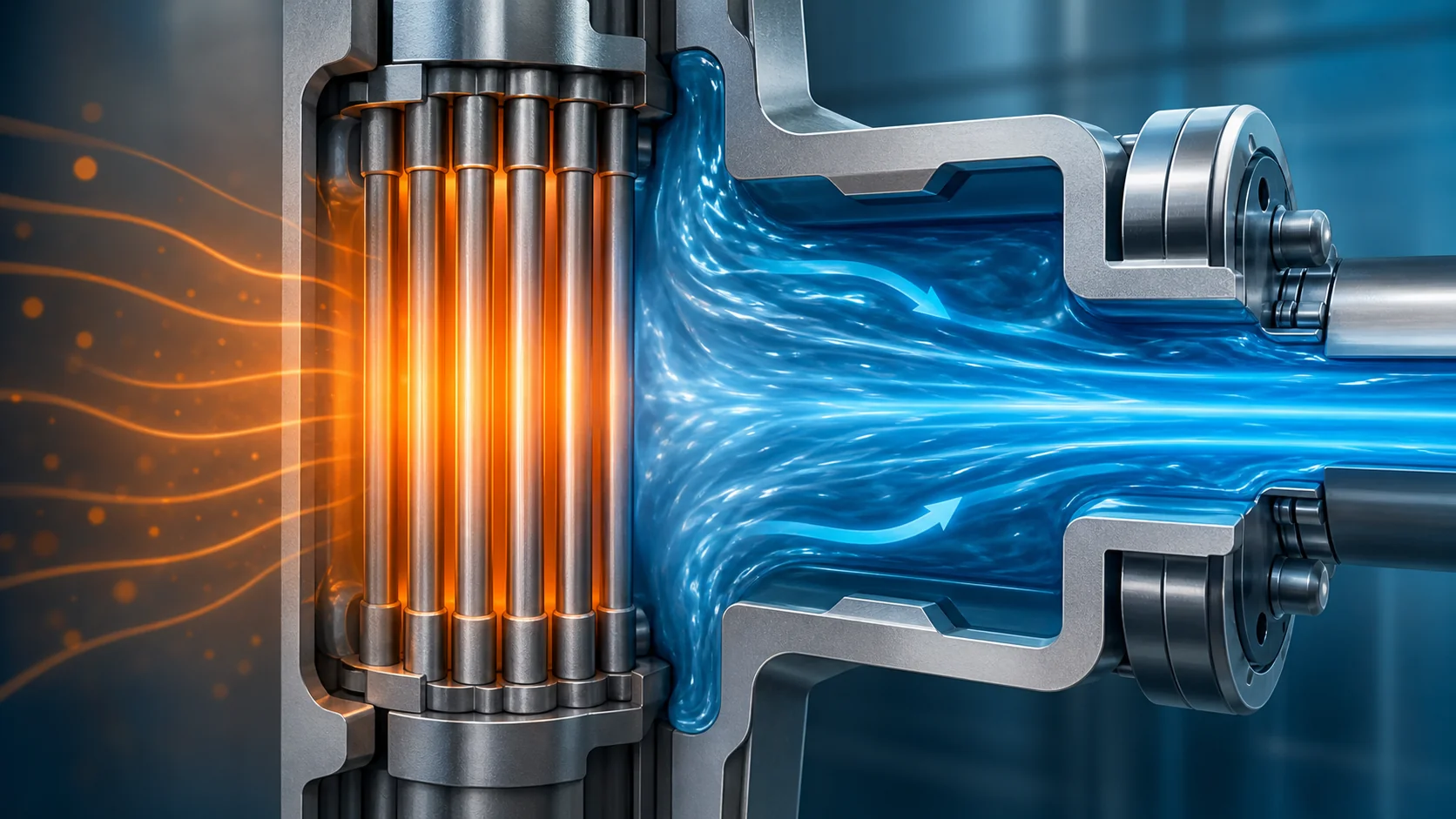
Low Fan or High Fan? — Why Coolant Flow Rate Changes the Temperature
Because the heat produced in the core is set by reactor power, the energy balance Q ≈ ṁ × cp × ΔT means a larger coolant flow rate gives a smaller coolant temperature rise, which is why flow is a key variable the protection system watches.
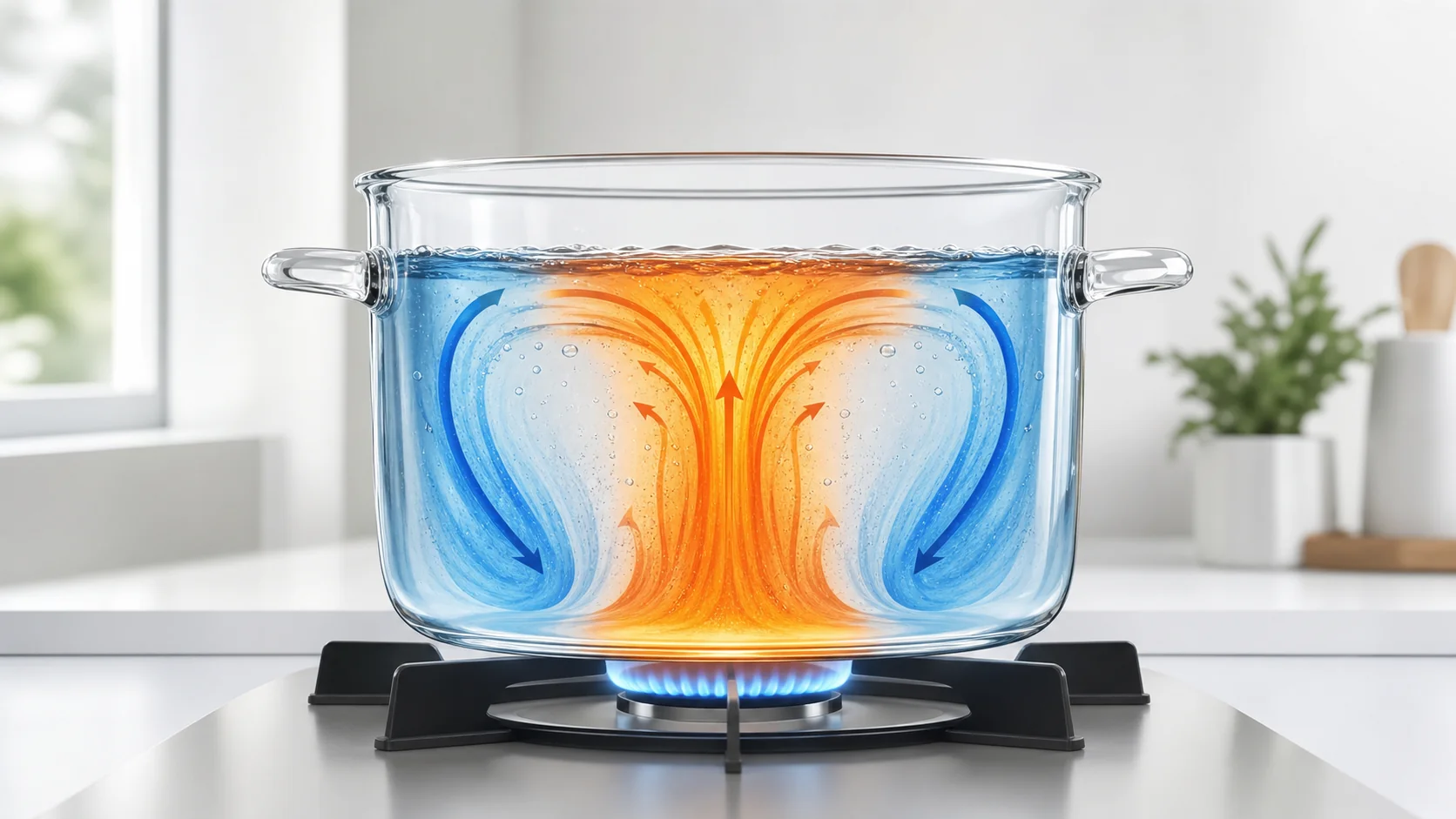
When Water Starts Spinning on Its Own — The Secret of Convection Heat Transfer
Convection moves heat by moving the fluid itself, naturally through buoyancy or forced by pumps, and Newton's law of cooling, q″ = h × (Ts − T∞), shows why a larger temperature difference and a larger h carry more heat away.