Nuclear Theory archive — page 2
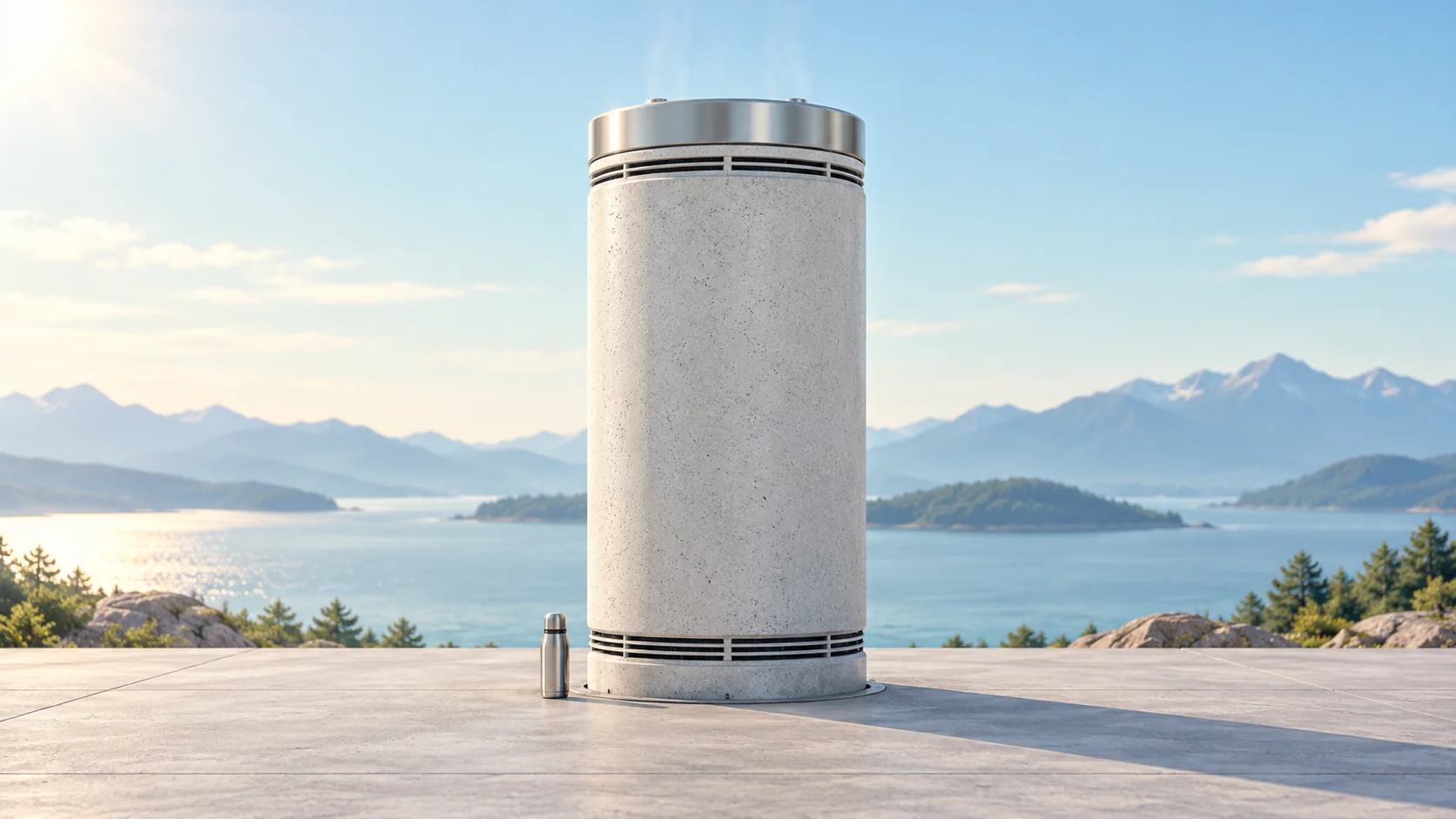
What If You Designed a Thermos Backwards? — How a Dry Storage Cask Works
A dry cask stores pool-cooled spent fuel within a heat budget of about 34 kW for 32 assemblies, shielding it, cooling it by natural convection, sealing it in helium and keeping it subcritical.
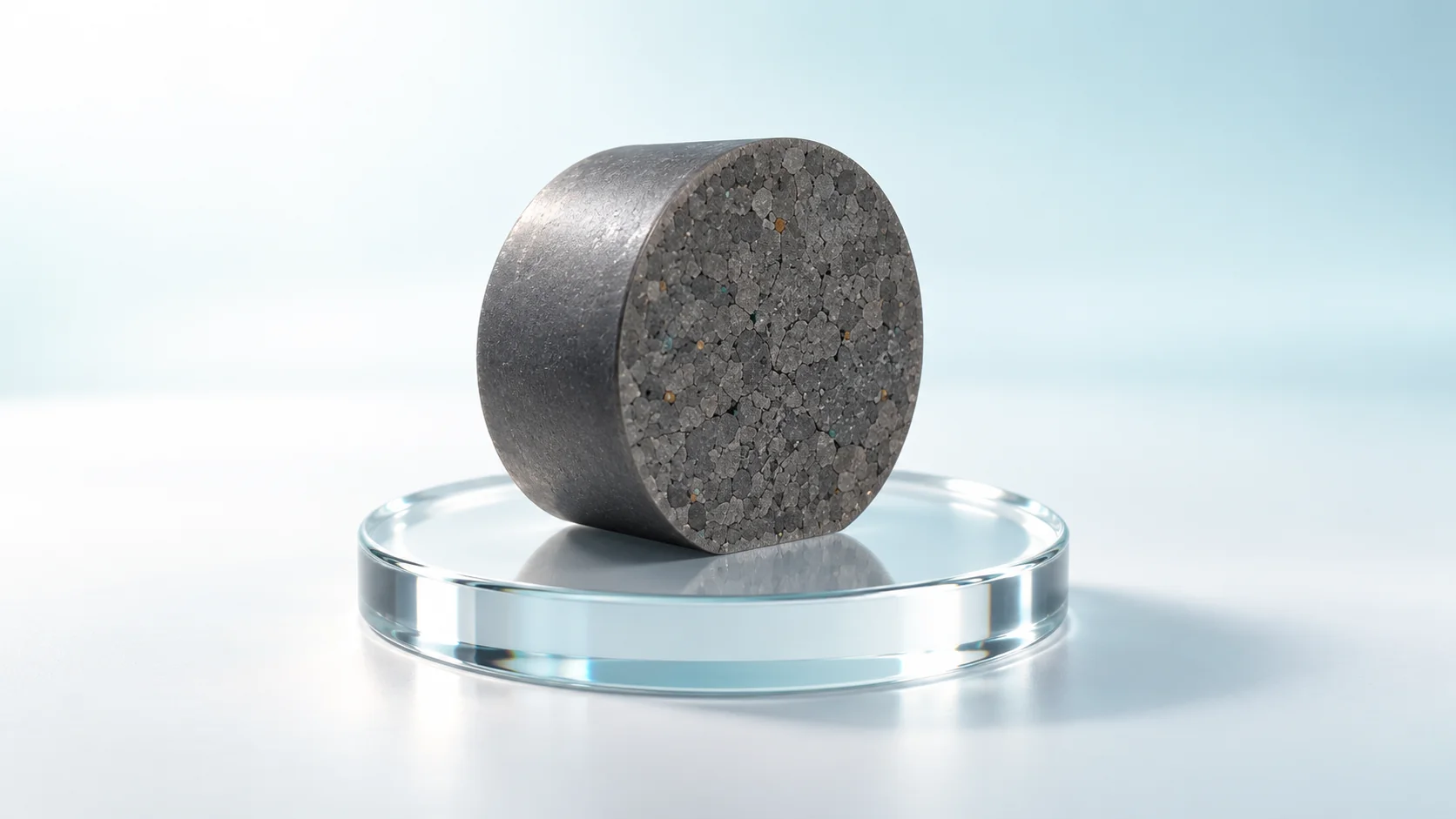
Trash or Compost? Is Spent Nuclear Fuel Waste or a Resource?
Spent fuel is about 93% uranium, 1% plutonium and 5% fission products, and it legally becomes waste only when a decision is made not to use it again, which is why countries diverge.
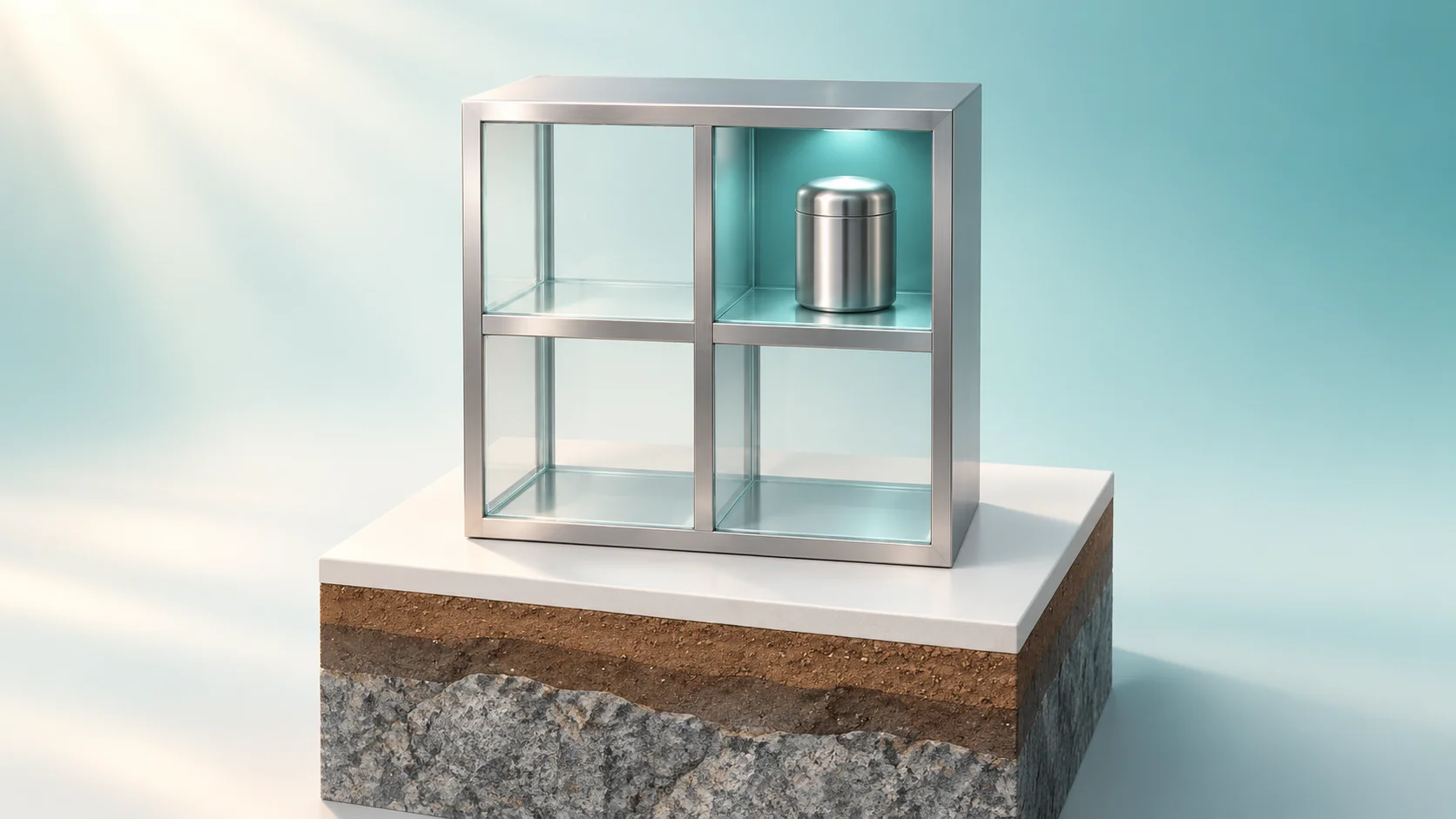
Two Questions at the Recycling Bin — How Intermediate- and High-Level Waste Are Told Apart
South Korean waste is high-level only if long-lived alpha emitters reach 4,000 Bq/g and heat reaches 2 kW/m³ together; meeting one alone leaves it intermediate- or low-level, with a different disposal depth.
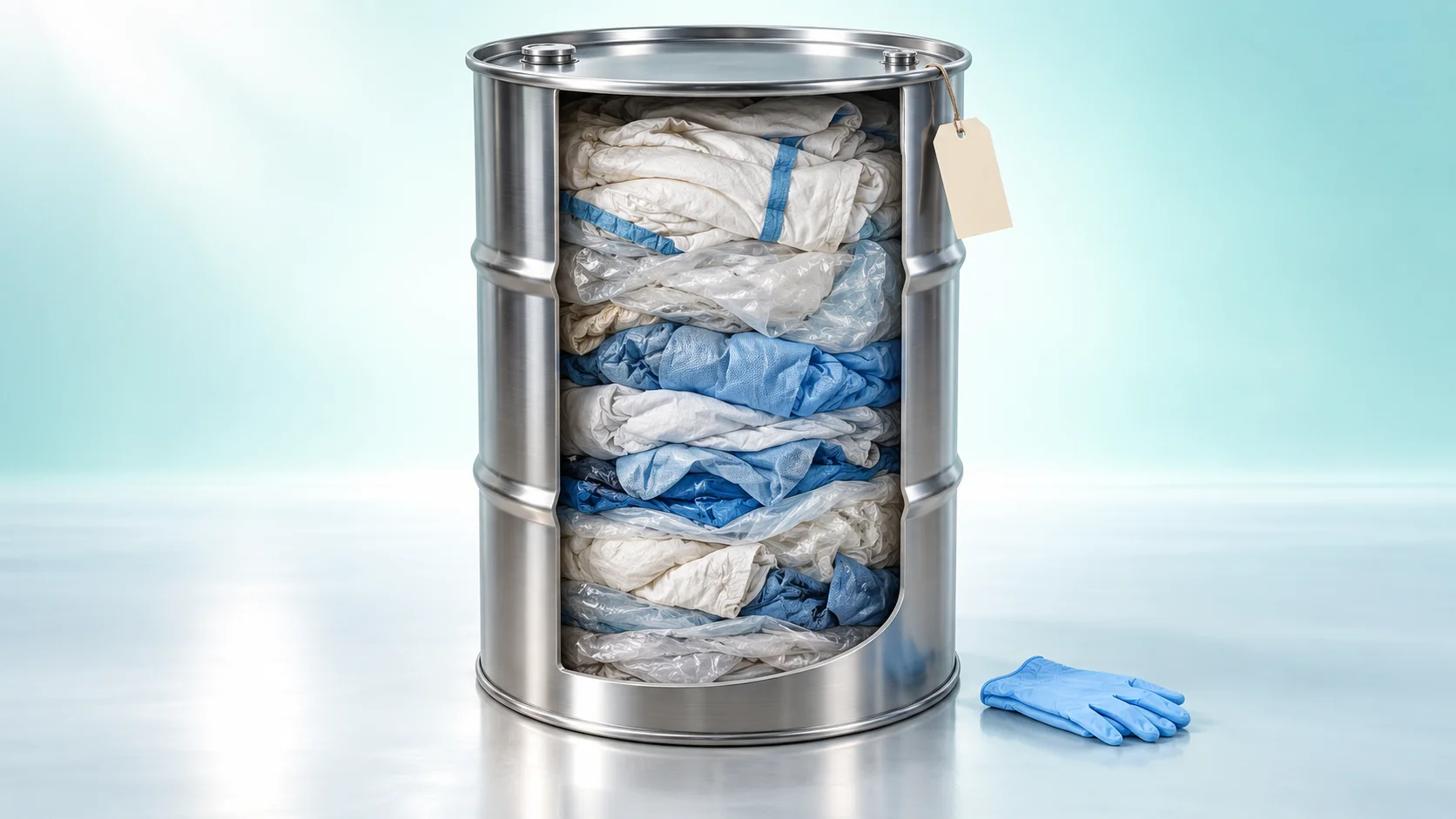
No Glowing Green Drums — The Real Face of Low-Level Radioactive Waste
Low-level waste is used gloves, coveralls, filters and resin whose concentration, from 10 to about 1.11 million Bq/g for cesium-137, falls in a legal band that sets how it is packed and where it goes.

Like Bathwater Down a Stream — How Far Does a Nuclear Plant's Thermal Discharge Spread?
An APR1400-type plant sends about 2,600 MW of heat to the sea in water around 7 °C warmer than intake, which fades as it mixes and changes, rather than simply harms, the nearby ecosystem.
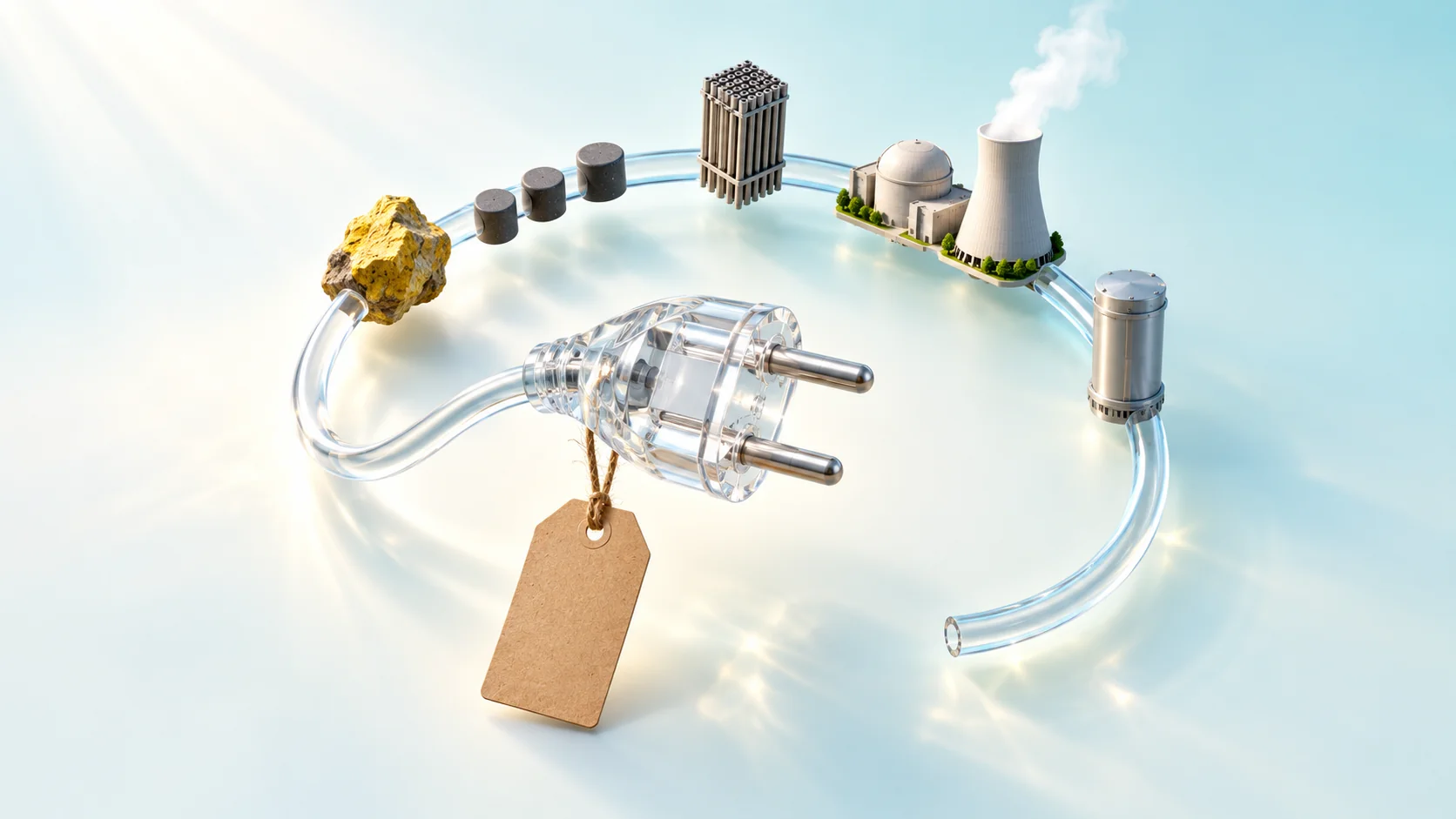
What If Electricity Came with a Carbon Label? — Nuclear Power's Life-Cycle Emissions
Counted from mining to waste management, nuclear electricity has an IPCC median of 12 gCO₂e per kWh (range 3.7–110), overlapping wind and other low-carbon sources, with the spread driven by enrichment method and lifetime assumptions.
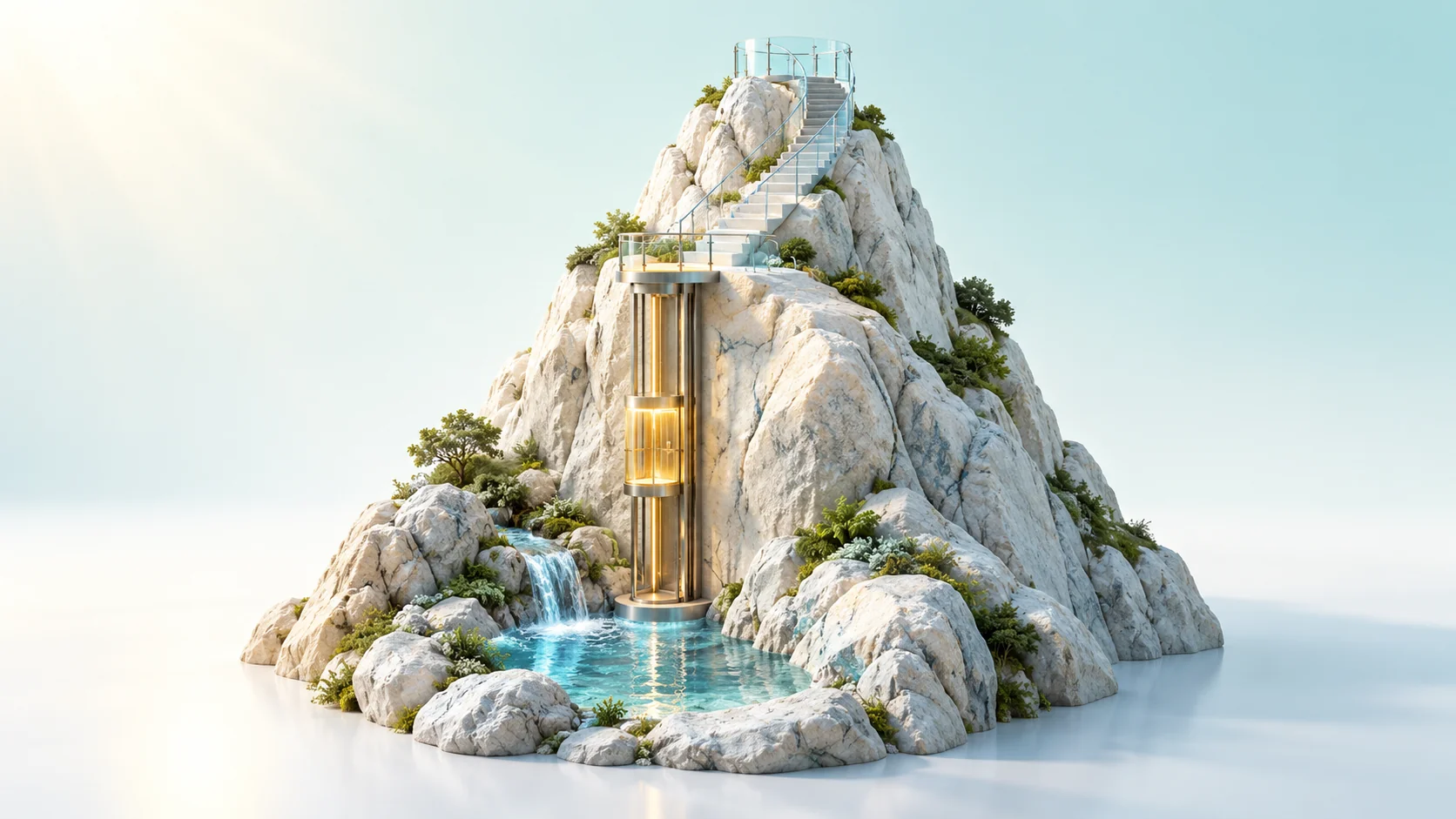
Stairs or Elevator? — Why Temperature Matters in Nuclear Hydrogen Production
The minimum electricity to split water falls from 32.7 to 26.0 kWh per kilogram of hydrogen between 25°C and 800°C, so low-temperature electrolysis works with any reactor while steam electrolysis and the sulfur-iodine cycle favor hot reactors.
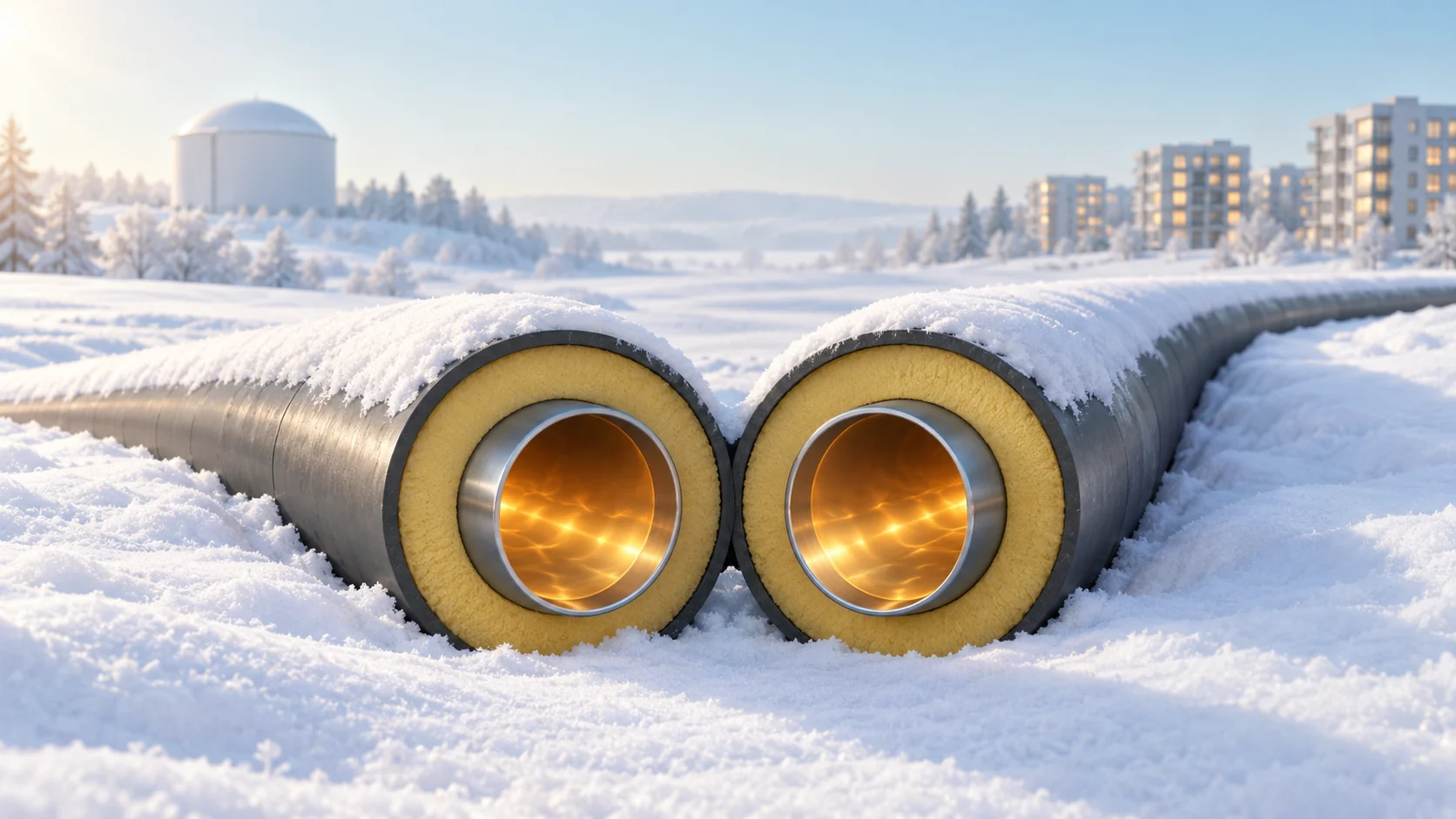
One Boiler Room for the Whole Neighborhood — Nuclear District Heating
Tapping 600 MWt of steam in an example 1,000 MWe plant costs only 100 MWe yet cuts discarded heat by 500 MWt, which is how Beznau, Bohunice and Haiyang heat nearby towns while isolation loops keep reactor water apart.
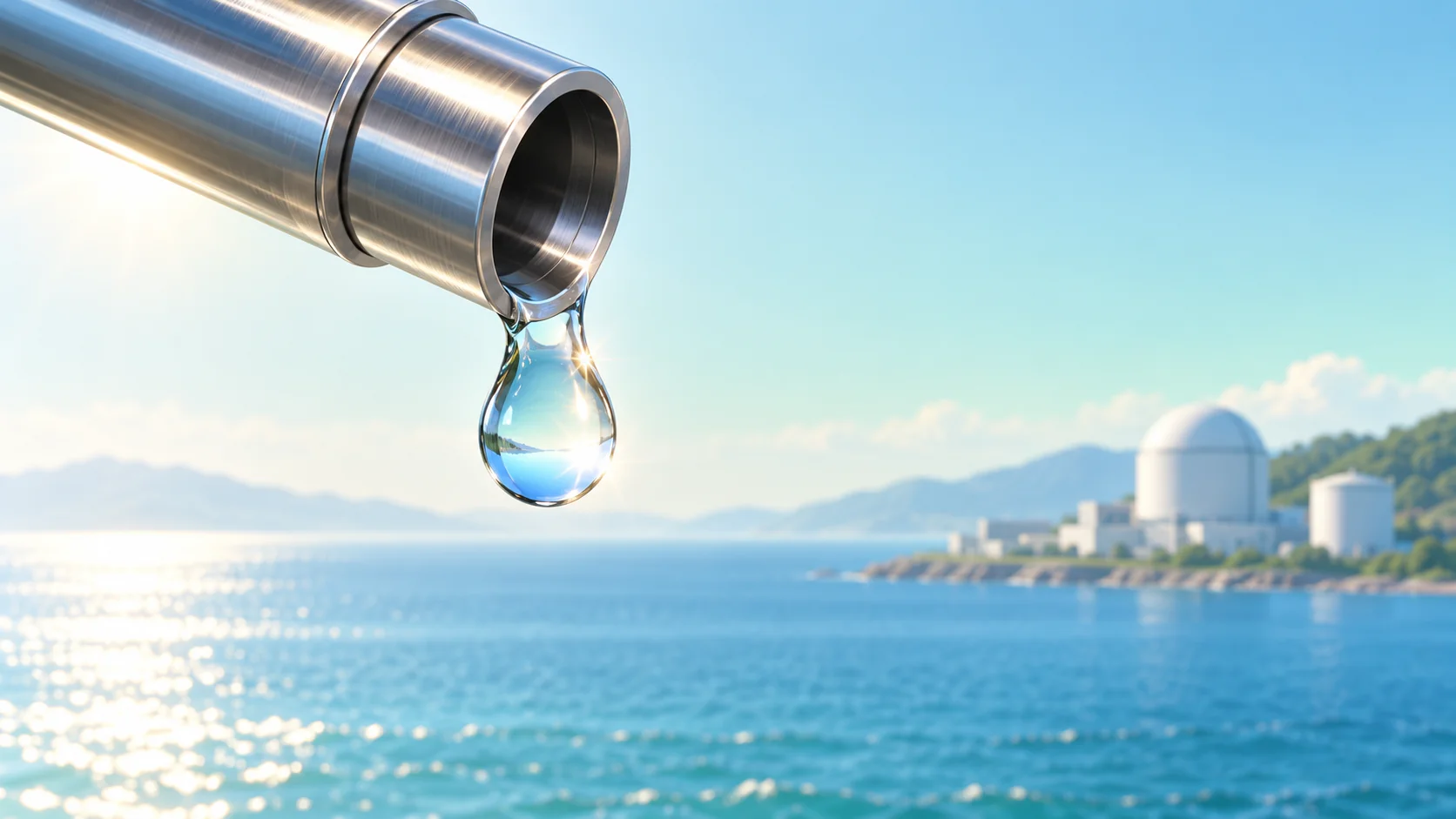
Why the Drops on a Kettle Lid Aren't Salty — Nuclear Desalination and Reactor Heat
Reverse osmosis needs about 3–4 kWh of electricity per cubic meter while MSF and MED reuse low-grade heat, and reactors have supplied both for more than 150 reactor-years behind isolation loops that keep coolant and drinking water apart.
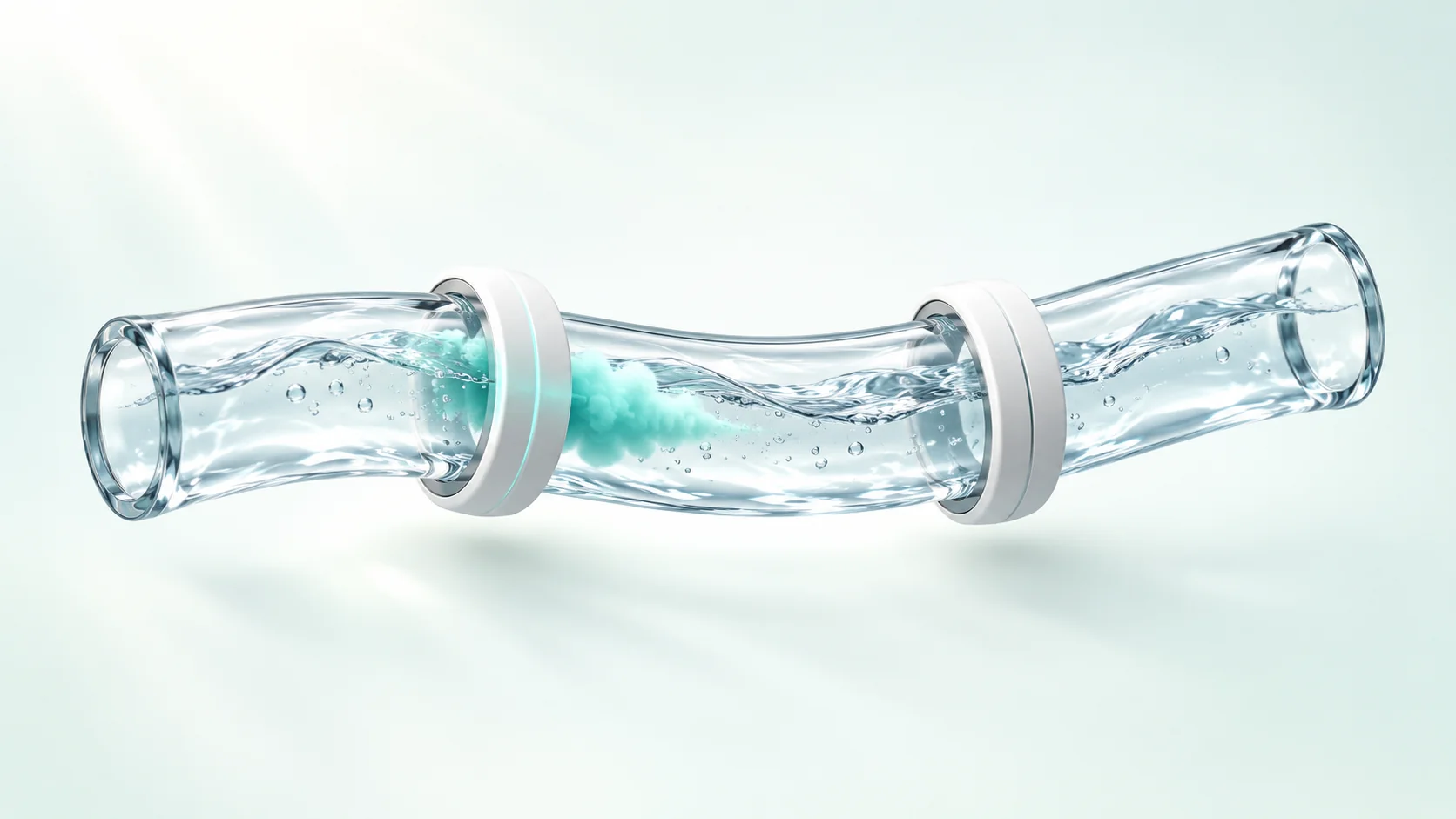
Like Dye in a River — How Radioactive Tracers Follow Flows You Can't See
A trace amount of a chemically identical radioisotope travels with a flow, so two detectors 120 m apart and a 60 s transit time give a 2.0 m/s velocity, and the half-life is picked to match the length of the job.