Nuclear History archive — page 29

Marie Curie's Two Nobel Prizes (1903, 1911)
Marie Curie shared the 1903 Nobel Prize in Physics after Pierre insisted she be included, then won the 1911 Nobel Prize in Chemistry alone for proving radium an element, becoming the only person honoured in two sciences.

Early Radiation Injuries and the Birth of Radiation Protection
From the first X-ray burns of 1896 and Becquerel's radium burn in 1901 to Clarence Dally's death in 1904, early injuries prompted the first warnings and, in 1928, the international committee that became the ICRP.

The Radium Craze (1904–1932)
From a French radium factory in 1904 to radon water crocks, Radithor and Undark paint, radium was marketed as a source of health until dial painters' illnesses and Eben Byers' death in 1932 showed the harm it caused inside the body.

Half-life and Radioactive Decay Chains
In 1899 Rutherford found that thorium emanation lost half its activity in about a minute, again and again; by 1907 half-lives had helped Rutherford, Soddy and Boltwood sort dozens of new substances into decay chains ending in lead.

E=mc² and Mass–Energy Equivalence (1905)
In September 1905 Einstein showed that a body giving off energy L loses mass L/V², the relation we now write as E=mc², confirmed by Cockcroft and Walton's lithium experiment in 1932.

Einstein's Special Relativity (1905)
Working at the Bern patent office, Einstein sent "On the Electrodynamics of Moving Bodies" to Annalen der Physik on 30 June 1905; from two postulates it derived the relativity of simultaneity, time dilation and length contraction, and made the ether superfluous.
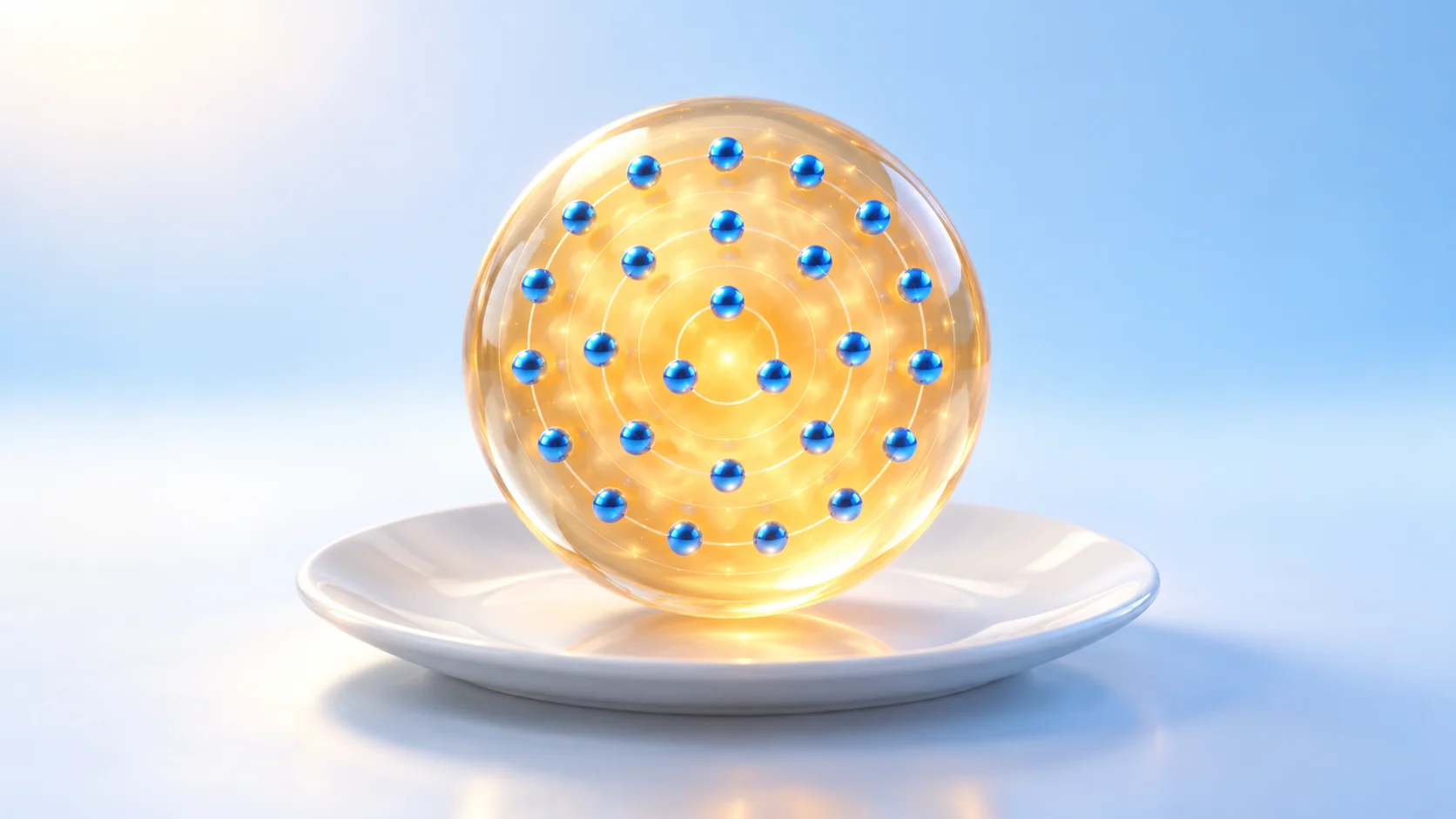
Thomson's Atomic Model (1904)
In 1904 J. J. Thomson modelled the atom as rings of electrons inside evenly spread positive charge and linked the rings to the periodic table; the 'plum pudding' name was coined by others, and scattering experiments of 1909–1911 replaced the model with the nucleus.

Radium Heat and Atomic Energy (1903)
In March 1903 Curie and Laborde found that radium releases about 100 calories per gram every hour without stopping, and Rutherford and Soddy concluded that the energy latent in atoms must be enormous.

Rutherford and Soddy: Radioactive Change (1902)
At McGill in 1901–1902, Rutherford and Soddy separated thorium X, watched it decay while thorium regained its activity, and concluded that radioactive elements transform into new elements.

Planck's Quantum Hypothesis (1900)
On 19 October 1900 Max Planck presented a black-body formula that fitted all measurements, and on 14 December he derived it by assuming energy is exchanged in packets E = hν, which he called an act of desperation.