Nuclear History archive — page 11
Hahn's Fission Nobel and the Exclusion of Lise Meitner
Otto Hahn alone won the 1944 Nobel Prize in Chemistry for fission; Lise Meitner, nominated 49 times, was left out for reasons historians later traced to committee structure, wartime isolation and haste.
World War II Begins: Fission Research in Six Countries (1939–1940)
When war broke out on September 1, 1939, no country yet treated fission as a top-priority weapon, but German Army Ordnance, France's Ministry of Armament, a US uranium committee, a Soviet commission and Japan's RIKEN were all drawing the research toward the state.
McMillan and Abelson Discover Neptunium (1940)
In spring 1940 at Berkeley, McMillan and Abelson showed that a 2.3-day activity grew from 23-minute uranium-239 and was element 93, submitting "Radioactive Element 93" on 27 May 1940.
Smuggle the 26 Cans: Norway's Heavy Water, 1940
In March 1940 Jacques Allier took Norsk Hydro's 185 kg of heavy water to Paris; in June Halban and Kowarski shipped it from Bordeaux to Britain on the SS Broompark.
Splitting on Its Own: Spontaneous Fission, 1940
In 1940 Flerov and Petrzhak, working under Kurchatov, found spontaneous fission of uranium, ruled out cosmic rays in Moscow's Dinamo metro station and reported it in Physical Review 58, 89, while Zeldovich, Khariton and a new uranium commission laid the first Soviet groundwork.
Nishina's Cyclotrons in Tokyo (1937–1940)
Yoshio Nishina's RIKEN laboratory started a cyclotron in April 1937, and in 1940 his team with chemist Kenjiro Kimura found uranium-237 and symmetric fission by fast neutrons, narrowly missing element 93.
Szilard's Campaign for Voluntary Secrecy (1939–1940)
In spring 1939 Leo Szilard urged physicists to hold back fission results; Joliot refused, but in 1940 a voluntary National Research Council committee led by Gregory Breit kept American fission papers out of print.
Germany's Uranium Club (1939)
In April 1939 an education-ministry meeting formed Germany's informal Uranium Club while two Hamburg chemists warned the army of a new explosive; after war began, Army Ordnance relaunched the group in September.
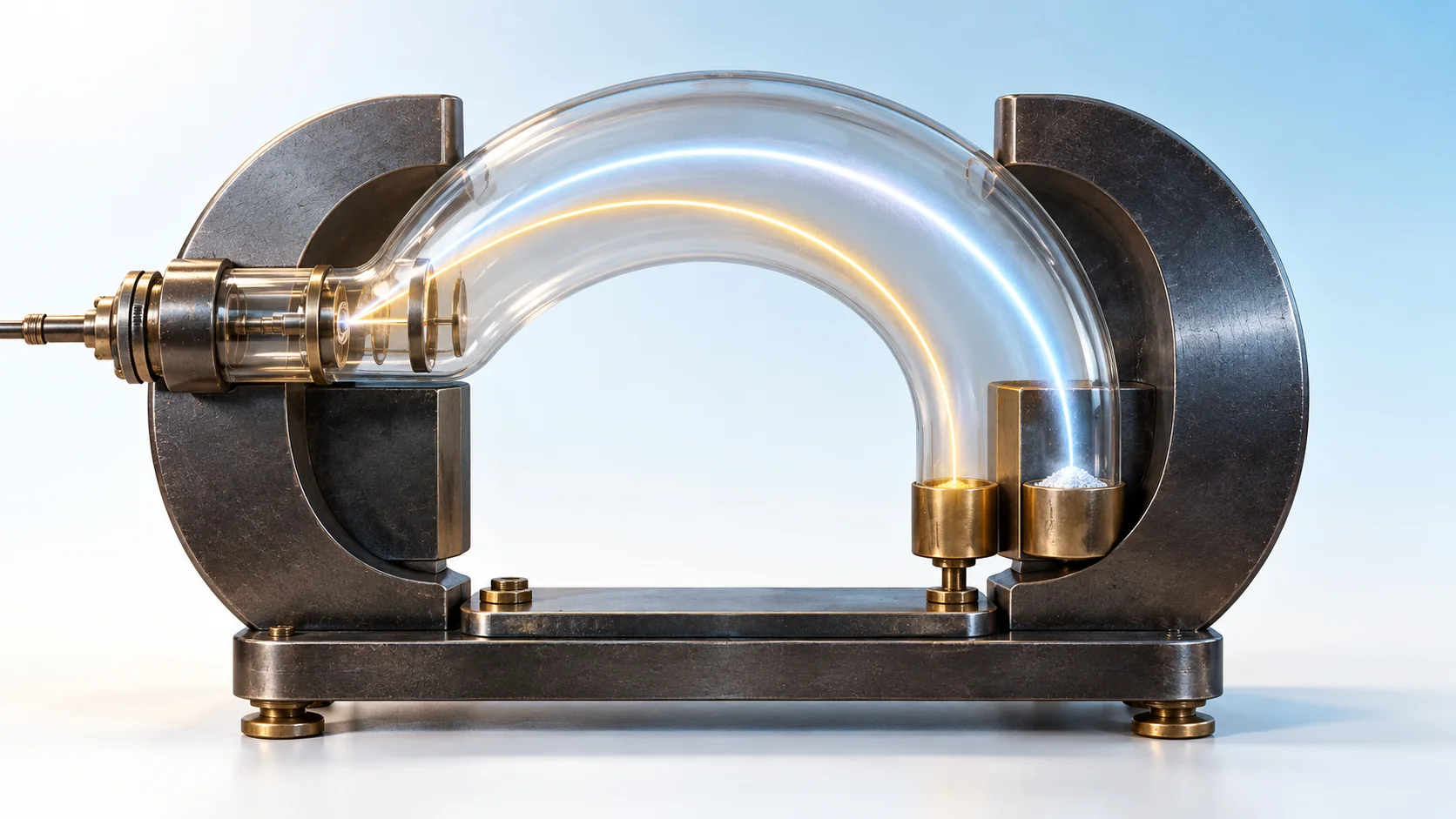
Bohr, Wheeler and Uranium-235 (1939)
In February 1939 Niels Bohr argued that rare U-235, not U-238, splits with slow neutrons; the Bohr–Wheeler theory published on 1 September 1939 explained why, and Nier and Dunning's separated samples confirmed it in March 1940.

One Begets Two: Fission Neutrons, 1939
In spring 1939 Szilard and Zinn, Fermi's team and Joliot's Paris group found that each fission frees more than one neutron (Paris: 3.5 ± 0.7; today about 2.4), opening the road to a chain reaction.