Nuclear History archive — page 10

Code Name S-1 — The Committee Behind the Bomb Research
Renamed S-1 in 1941 to hide the word uranium, the committee reorganized for an all-out effort in December 1941, chose in May 1942 to push all four production routes, and in June 1942 became a six-member executive committee as the Army took over construction.

Pearl Harbor and the Bomb Decision (1941)
Roosevelt approved accelerated uranium research on 9 October 1941 and S-1 announced an all-out effort on 6 December; after Pearl Harbor the programme gained wartime urgency and money, and full-scale plants were approved in December 1942.

The Tizard Mission (1940)
Between August and November 1940 the Tizard Mission shared the cavity magnetron, jet engine data and early MAUD Committee uranium work with the United States, founding the radar boom and the channel for later nuclear cooperation.

Vannevar Bush, the NDRC and the OSRD (1940–1941)
In June 1940 Vannevar Bush won Roosevelt's approval for the NDRC, which absorbed the uranium committee, and in June 1941 Executive Order 8807 turned it into the OSRD, home of the S-1 uranium section.
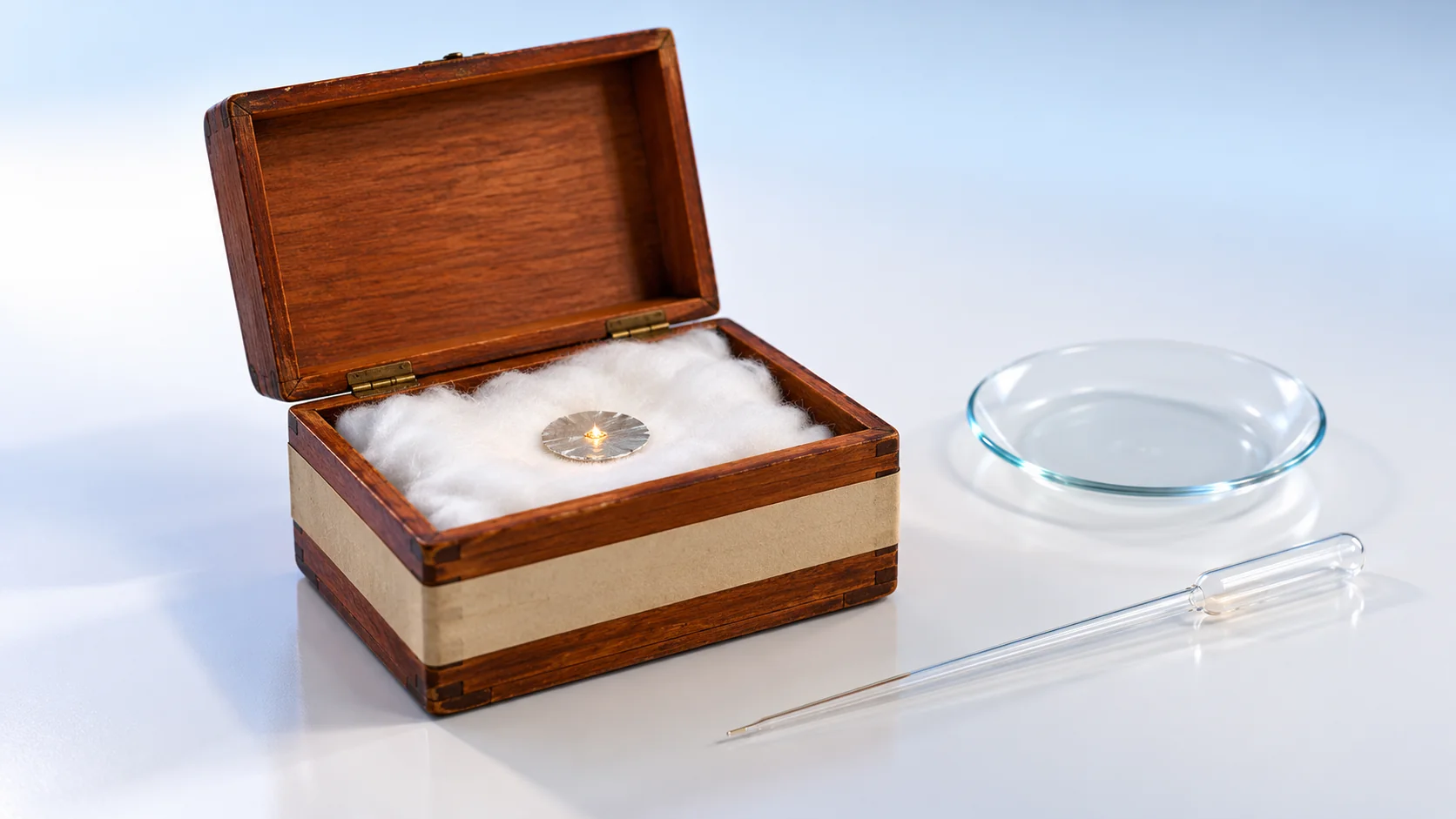
Seaborg and the Discovery of Plutonium (1941)
On the night of 23 February 1941 Seaborg's Berkeley team identified element 94; on 28 March a 0.5-microgram sample showed plutonium-239 splits under slow neutrons, about 1.7 times more readily than uranium-235.

The MAUD Committee Report (1941)
Named after the line "Maud Ray Kent" in a 1940 telegram, Britain's MAUD Committee reported in July 1941 that a uranium bomb was practicable, and Mark Oliphant carried the case to the United States.

The Frisch–Peierls Memorandum (1940)
In March 1940 Otto Frisch and Rudolf Peierls estimated that the critical mass of pure uranium-235 might be about a kilogram, warned of fallout and civilian deaths, and urged Britain to act, leading to the MAUD Committee.

The Briggs Uranium Committee (1939–1941)
In October 1939 a three-man committee under Lyman Briggs began the US government's uranium work, recommending 4 tons of graphite and 50 tons of uranium oxide and spending a first $6,000 before the NDRC absorbed it in June 1940.

Alexander Sachs Briefs Roosevelt (1939)
Alexander Sachs read the Einstein letter to Roosevelt on 11 October 1939 and, by his account, persuaded him at breakfast the next day; Roosevelt's reply of 19 October created the Advisory Committee on Uranium.

The Einstein–Szilard Letter (1939)
In summer 1939 Leo Szilard twice visited Einstein's holiday cottage; the resulting letter of 2 August warned Roosevelt of extremely powerful uranium bombs and of German moves on uranium.