Nuclear History archive — page 17

Einstein's Special Relativity (1905)
Working at the Bern patent office, Einstein sent "On the Electrodynamics of Moving Bodies" to Annalen der Physik on 30 June 1905; from two postulates it derived the relativity of simultaneity, time dilation and length contraction, and made the ether superfluous.
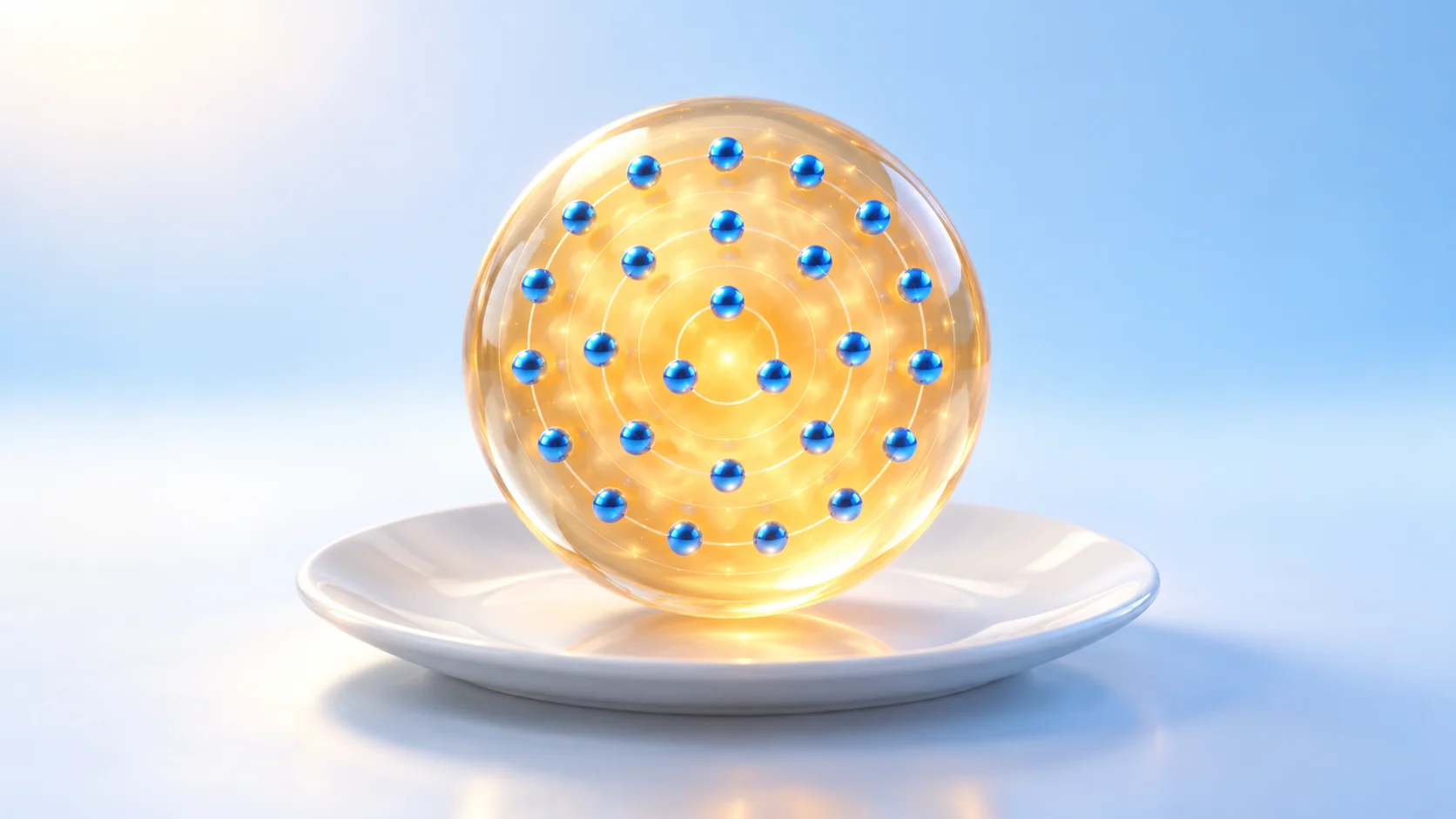
Thomson's Atomic Model (1904)
In 1904 J. J. Thomson modelled the atom as rings of electrons inside evenly spread positive charge and linked the rings to the periodic table; the 'plum pudding' name was coined by others, and scattering experiments of 1909–1911 replaced the model with the nucleus.

Radium Heat and Atomic Energy (1903)
In March 1903 Curie and Laborde found that radium releases about 100 calories per gram every hour without stopping, and Rutherford and Soddy concluded that the energy latent in atoms must be enormous.

Rutherford and Soddy: Radioactive Change (1902)
At McGill in 1901–1902, Rutherford and Soddy separated thorium X, watched it decay while thorium regained its activity, and concluded that radioactive elements transform into new elements.
Planck's Quantum Hypothesis (1900)
On 19 October 1900 Max Planck presented a black-body formula that fitted all measurements, and on 14 December he derived it by assuming energy is exchanged in packets E = hν, which he called an act of desperation.
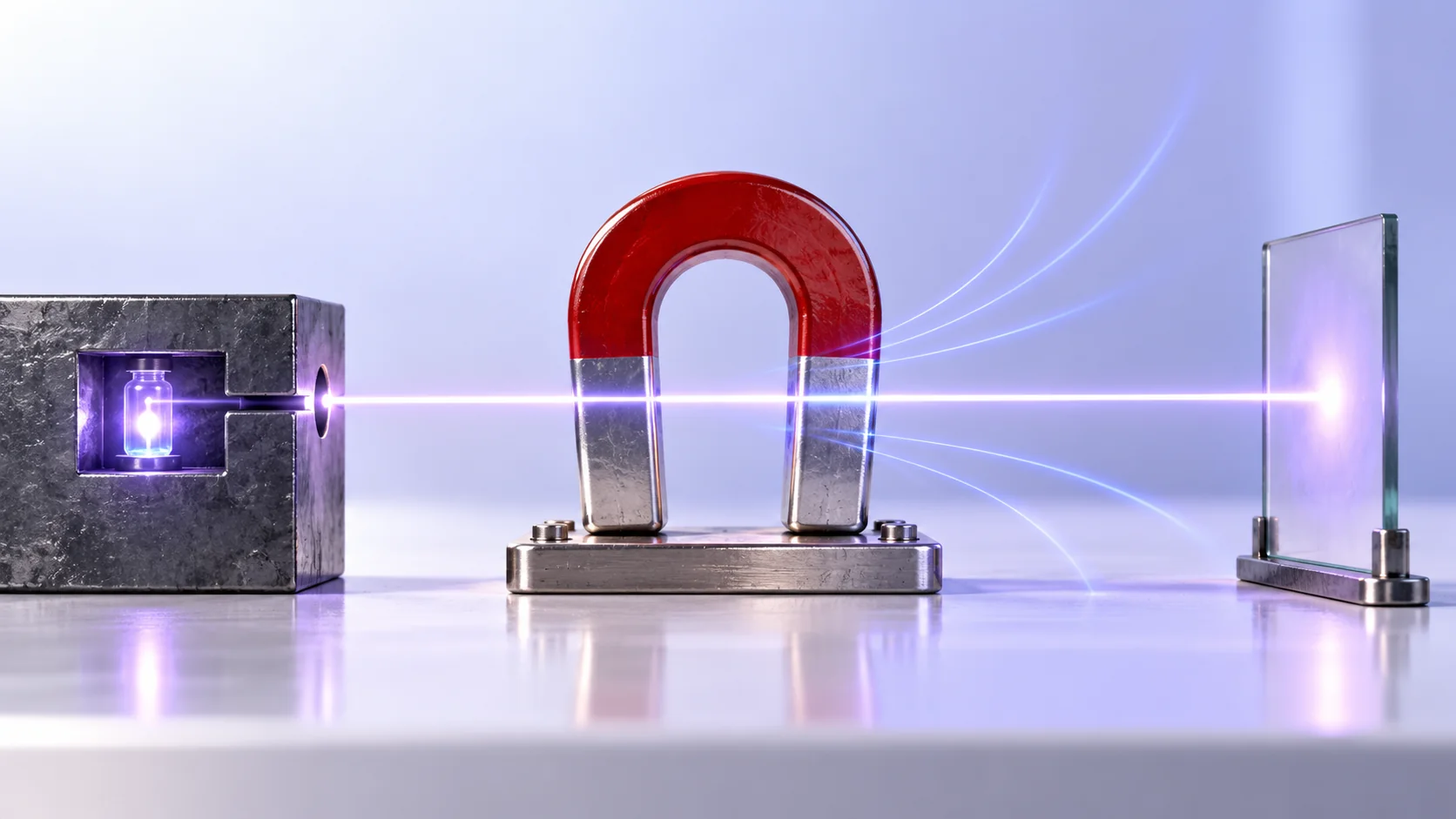
Villard Discovers Gamma Rays (1900)
Paul Villard's 1900 plates showed an undeflected beam from radium that passed 0.2 mm of lead; he called it X-rays from radium, Rutherford named it gamma rays in 1903, and in 1914 it was shown to be electromagnetic.
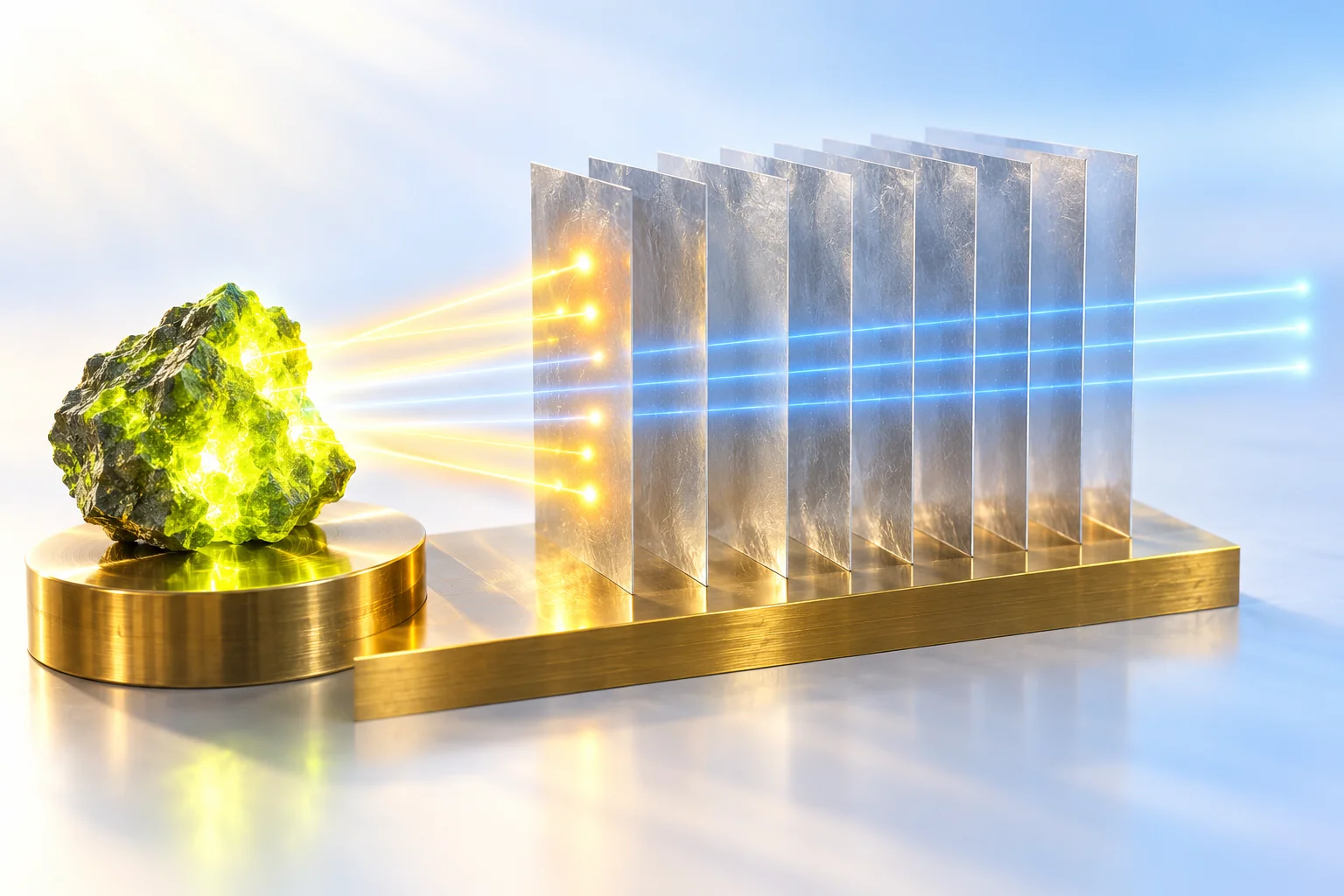
Rutherford Splits Uranium's Rays into Alpha and Beta (1899)
Rutherford's foil-by-foil measurements, signed in Cambridge in September 1898 and published in January 1899, showed two components in uranium radiation; identifying them as electrons and helium nuclei took another decade.

The Curies Discover Polonium and Radium (1898)
In 1898 the Curies announced polonium and radium by following radioactivity through pitchblende, and by 1902 several tons of mine residue had yielded 0.12 g of radium chloride.
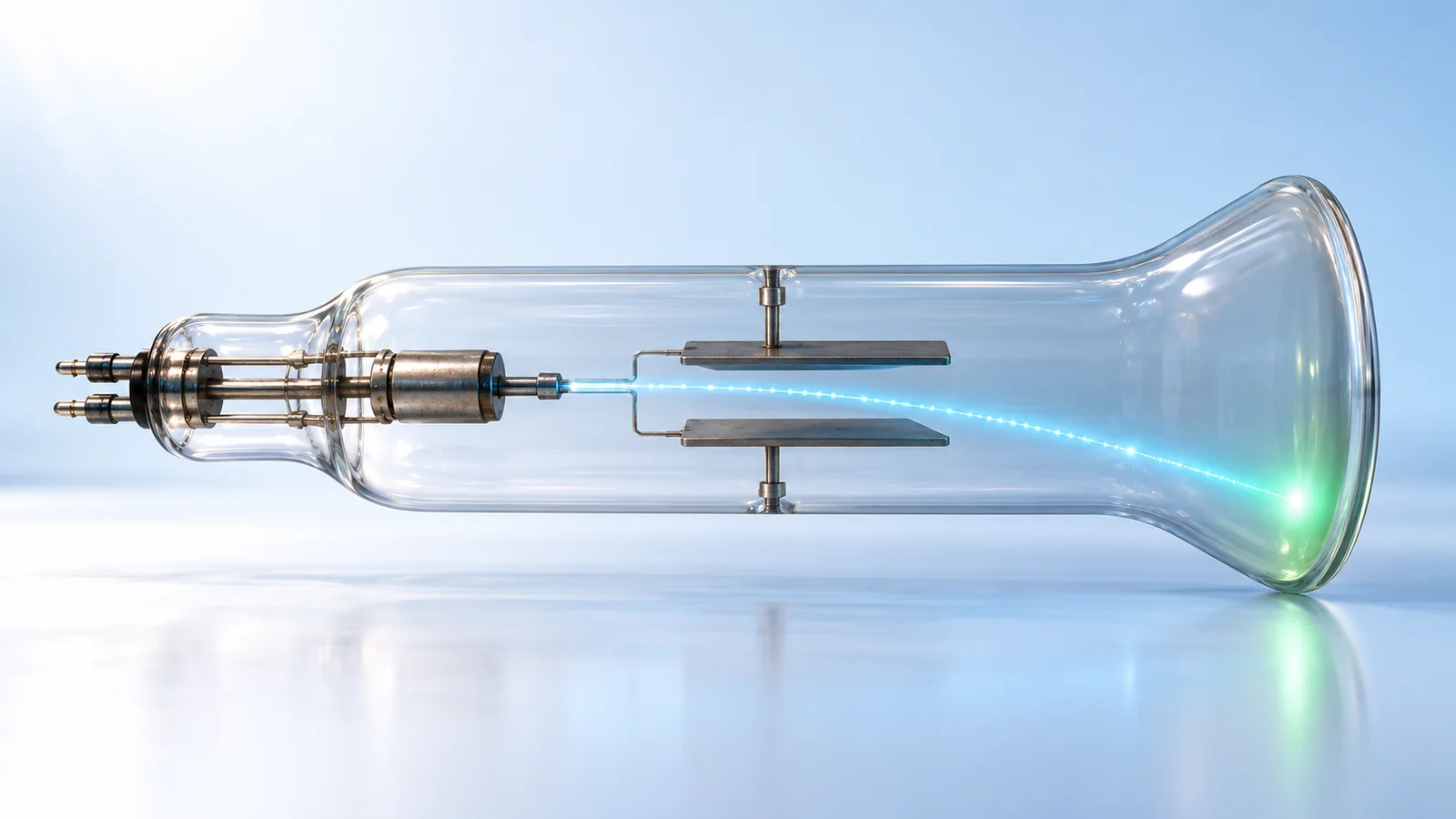
J.J. Thomson Discovers the Electron (1897)
In 1897 J.J. Thomson measured the mass-to-charge ratio of cathode rays, found it over a thousand times smaller than a hydrogen ion's, and concluded that atoms contain far lighter charged particles.

Becquerel and the Uranium Rays (1896)
In 1896 photographic plates stored in a drawer during cloudy weather showed Henri Becquerel that uranium emits radiation without sunlight, a discovery that won him half of the 1903 Nobel Prize and gave its name to the unit of radioactivity.