Nuclear History archive — page 12
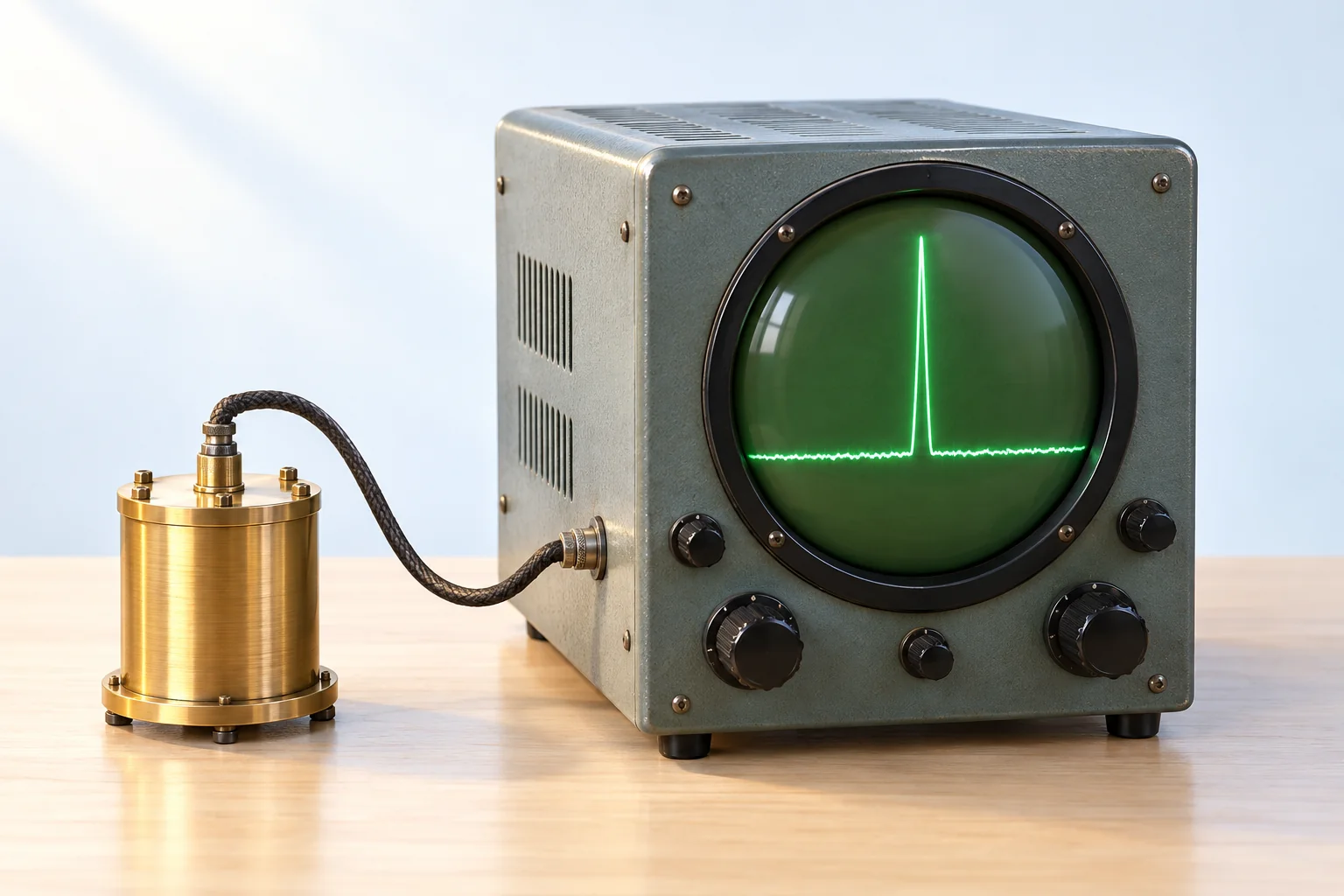
Fission Confirmed Around the World, 1939
From Frisch in Copenhagen on 13 January to Columbia, Carnegie, Johns Hopkins, Berkeley and Paris by the end of January 1939, replication turned fission into an accepted fact.

Bohr Brings Fission to America (1939)
In January 1939 Bohr and Rosenfeld sailed from Gothenburg to New York with the news of fission; Rosenfeld told a Princeton seminar the night they landed, and Bohr and Fermi announced it in Washington on 26 January.

How "Fission" Got Its Name (1939)
In January 1939 Otto Frisch asked biologist William Arnold what bacteria do when they divide; 'binary fission' became 'nuclear fission', first printed in Nature on 11 February 1939.

Meitner and Frisch Explain Fission (1938–1939)
Around Christmas 1938 Lise Meitner and Otto Frisch pictured the uranium nucleus as a wobbly liquid drop, estimated about 200 MeV per split from both electric repulsion and E = mc², and Frisch detected the fragments' large pulses on 13 January 1939.
It Wasn't Radium, It Was Barium
In December 1938 Hahn and Strassmann proved that their supposed radium isotopes behaved exactly like barium, the chemical evidence that the uranium nucleus had split.

Lise Meitner Escapes Nazi Germany (1938)
Stripped of her protection by the 1938 Anschluss and barred from travelling abroad, Lise Meitner crossed into the Netherlands on 13 July 1938 with Dirk Coster's help and reached Sweden, where she would soon interpret nuclear fission.

Fermi's Nobel Prize and Escape to America (1938)
Enrico Fermi left Rome on 6 December 1938 for the Nobel ceremony in Stockholm and never went back, sailing on to New York, where he arrived on 2 January 1939, while the 'new elements' in his prize citation turned out to be fission fragments.

Bethe's Theory of Stellar Fusion (1938–1939)
After the March 1938 Washington conference on stellar energy, Hans Bethe calculated the proton-proton chain (with Charles Critchfield) and the CNO cycle, matched them to the brightness of stars, and published in Physical Review on 1 March 1939.

The Nucleus as a Drop: Bohr's Compound Nucleus (1936)
In February 1936 Niels Bohr proposed that a captured neutron shares its energy with the whole nucleus, forming a long-lived compound nucleus; the idea explained Fermi's resonances and later framed the theory of fission.

Yukawa's Meson Theory (1935)
In 1934–35 Hideki Yukawa proposed that the nuclear force is carried by a particle about 200 electron masses heavy; the cosmic-ray muon was mistaken for it until Powell's team found the pion in 1947.