Nuclear History archive — page 16

The Age of the Earth and Radiometric Dating
Kelvin's cooling calculation gave the Earth 20 to 40 million years, but after radioactivity Boltwood (1907) and Holmes (1911–1913) used the lead-to-uranium ratio to date rocks at hundreds of millions to billions of years.
Early Radium Therapy and Radiation Medicine
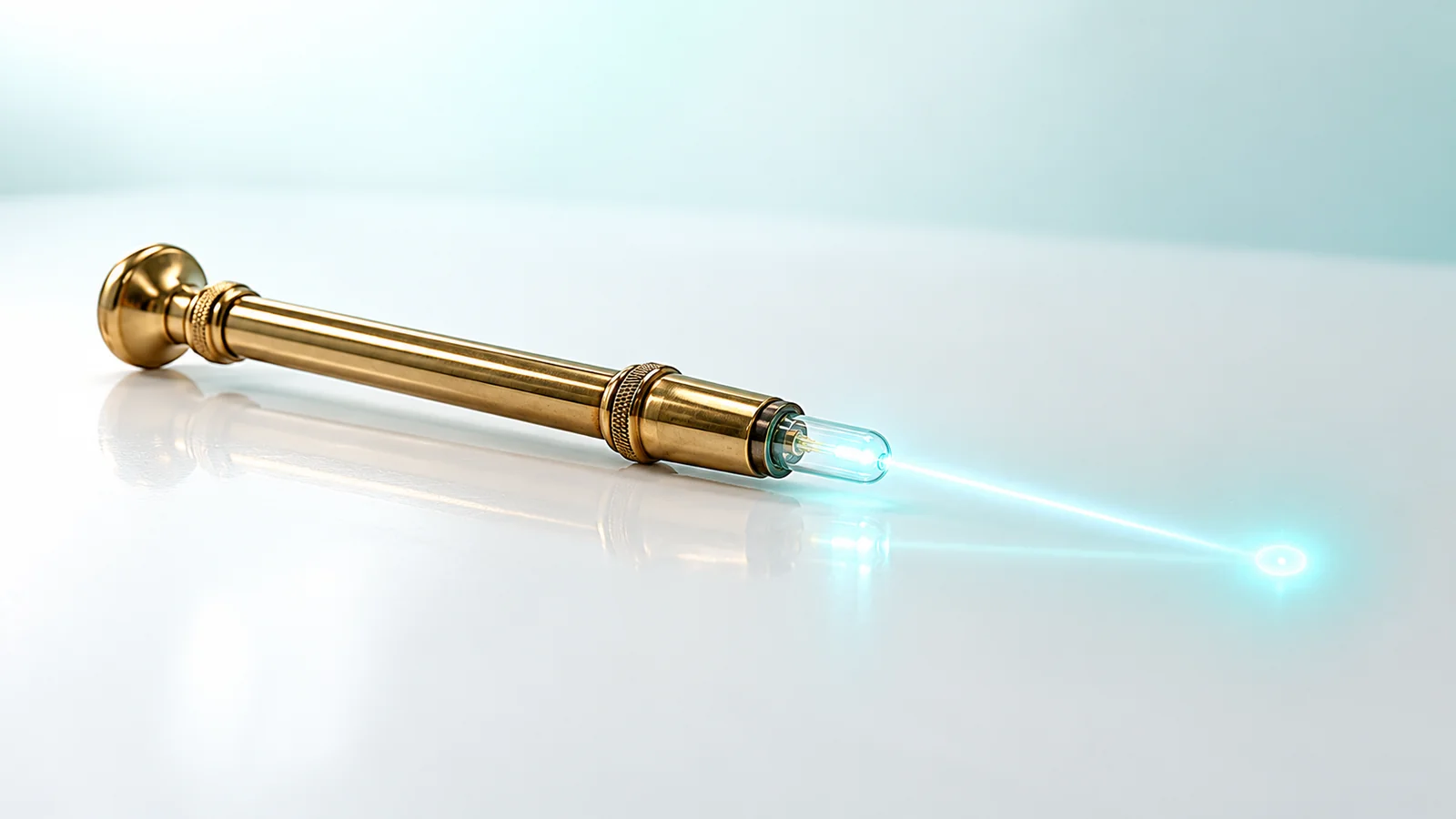
From Freund's X-ray treatment in 1896 and radium applied to skin lesions in Paris in 1901 to Bell's idea of placing radium inside tumours and the Paris Radium Institute of 1914, radiation became a medical tool once dose and aim were controlled.

The Birth of the Curie (1910)
In September 1910 the Brussels congress named the curie, defined by one gram of radium; the unit was later fixed at 3.7 × 10^10 decays per second (ICRU 1953, CGPM 1964) and joined by the SI becquerel in 1975.
Wilson's Cloud Chamber (1911)
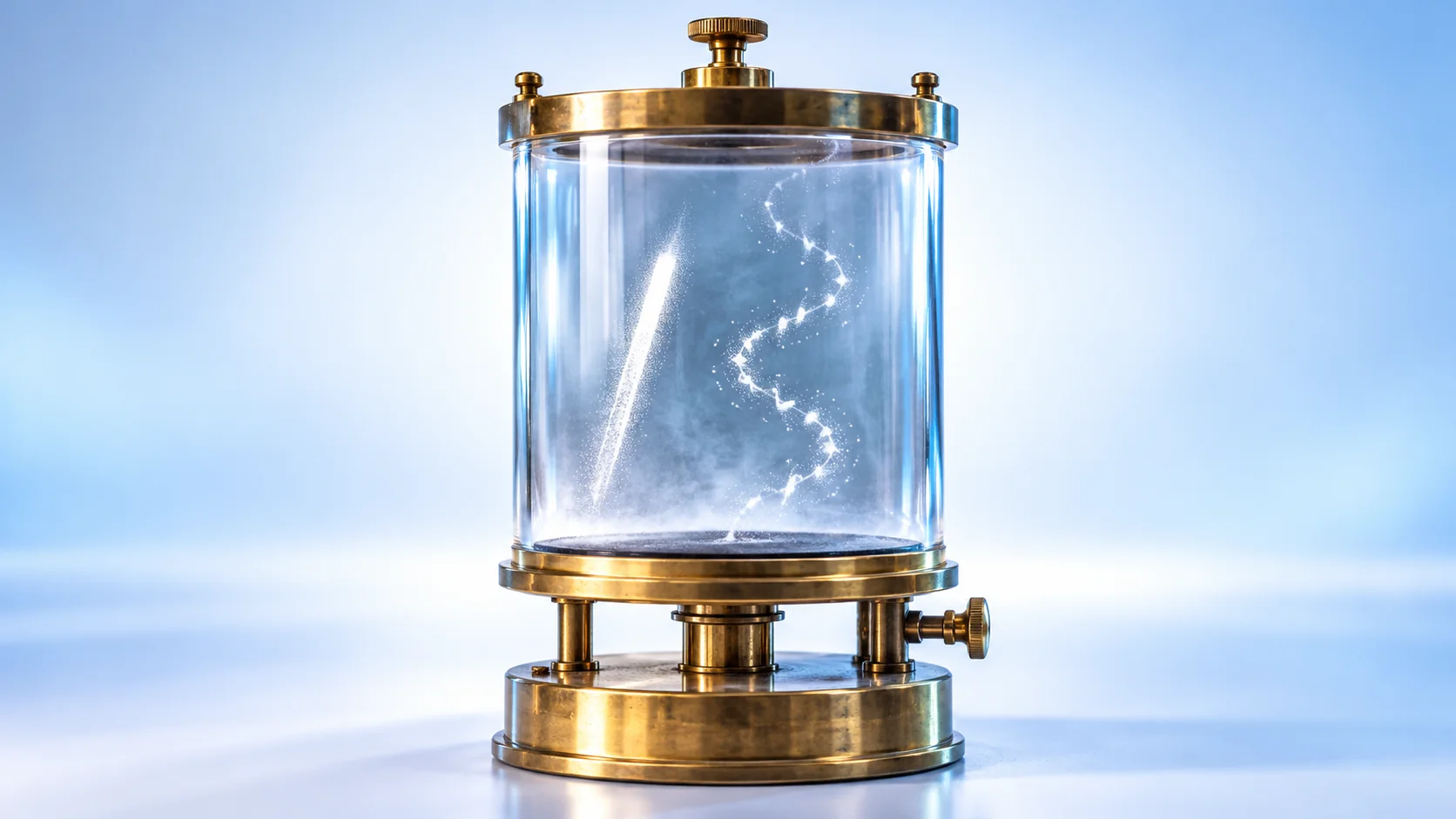
Inspired by coronas and glories on Ben Nevis in 1894, C.T.R. Wilson found that ions seed cloud droplets and in spring 1911 saw the tracks of electrons, alpha and beta particles, creating the cloud chamber that later revealed the positron.

The Geiger–Marsden Experiment (1909)
In 1909 Hans Geiger and Ernest Marsden counted alpha particles turned back by more than 90 degrees from metal reflectors, about 1 in 8,000 for platinum, setting up the discovery of the atomic nucleus.

Marie Curie's Two Nobel Prizes (1903, 1911)
Marie Curie shared the 1903 Nobel Prize in Physics after Pierre insisted she be included, then won the 1911 Nobel Prize in Chemistry alone for proving radium an element, becoming the only person honoured in two sciences.
Early Radiation Injuries and the Birth of Radiation Protection
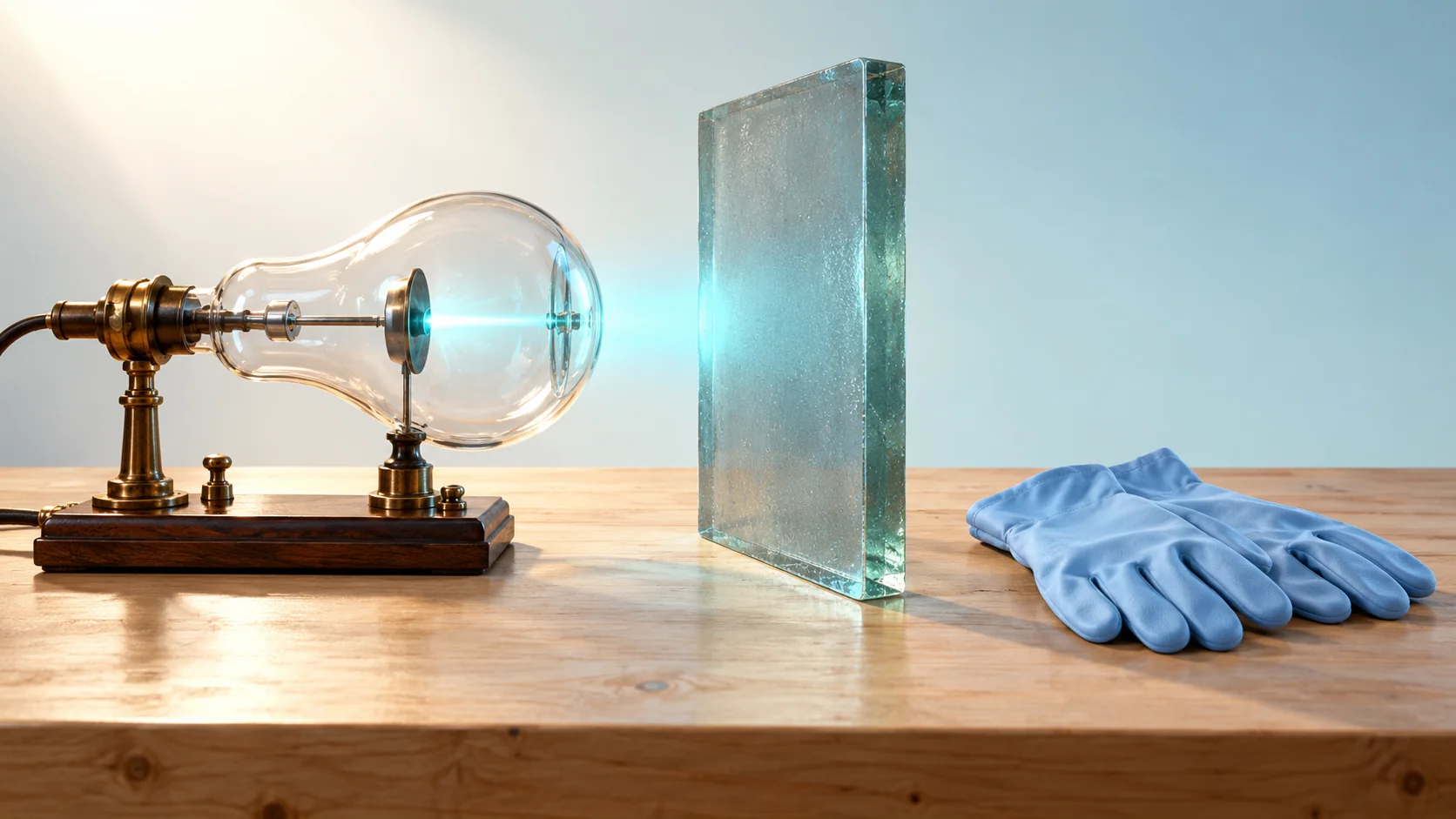
From the first X-ray burns of 1896 and Becquerel's radium burn in 1901 to Clarence Dally's death in 1904, early injuries prompted the first warnings and, in 1928, the international committee that became the ICRP.

The Radium Craze (1904–1932)
From a French radium factory in 1904 to radon water crocks, Radithor and Undark paint, radium was marketed as a source of health until dial painters' illnesses and Eben Byers' death in 1932 showed the harm it caused inside the body.

Half-life and Radioactive Decay Chains
In 1899 Rutherford found that thorium emanation lost half its activity in about a minute, again and again; by 1907 half-lives had helped Rutherford, Soddy and Boltwood sort dozens of new substances into decay chains ending in lead.

E=mc² and Mass–Energy Equivalence (1905)
In September 1905 Einstein showed that a body giving off energy L loses mass L/V², the relation we now write as E=mc², confirmed by Cockcroft and Walton's lithium experiment in 1932.