Nuclear History archive — page 20
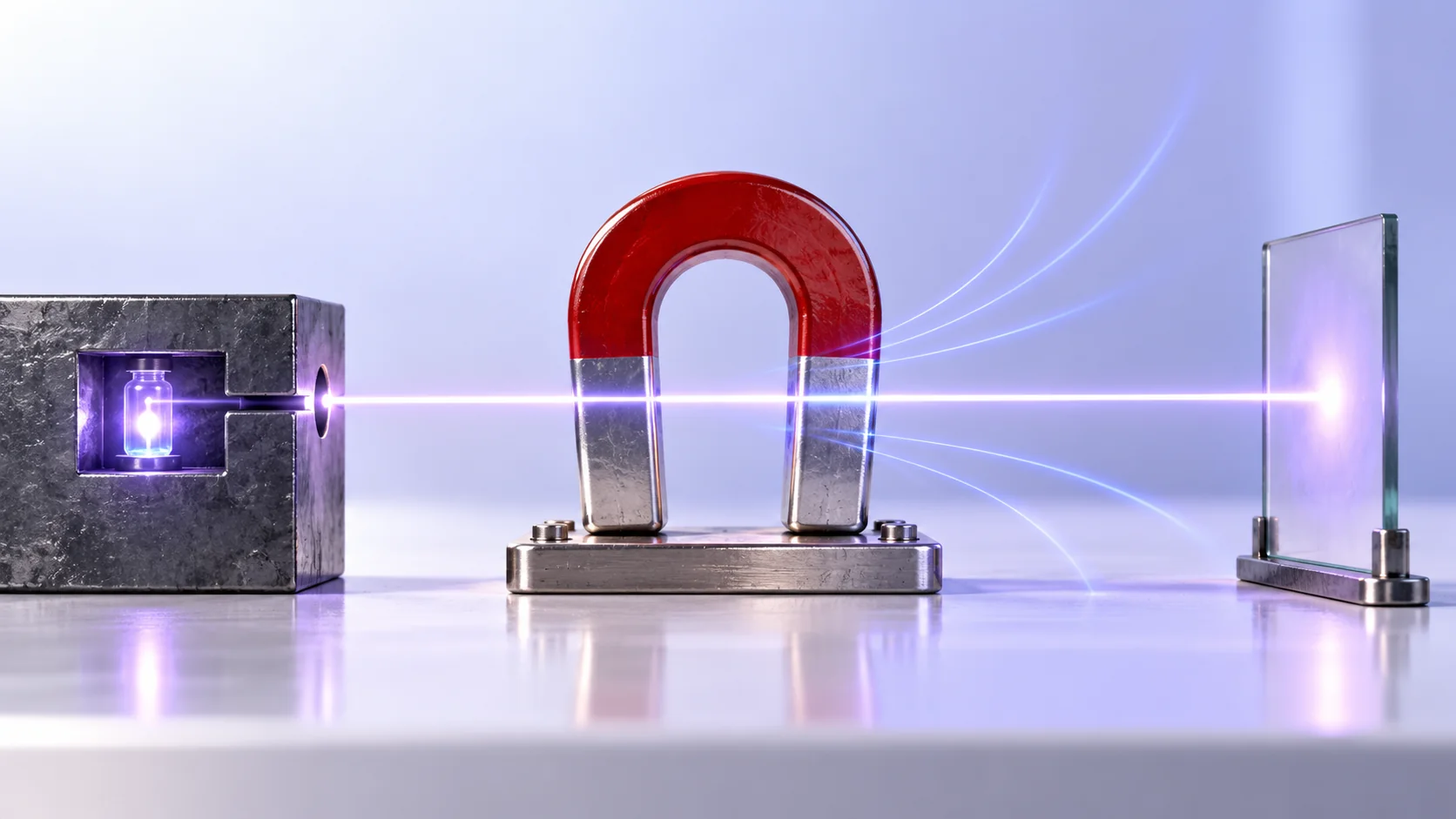
Villard Discovers Gamma Rays (1900)
Paul Villard's 1900 plates showed an undeflected beam from radium that passed 0.2 mm of lead; he called it X-rays from radium, Rutherford named it gamma rays in 1903, and in 1914 it was shown to be electromagnetic.
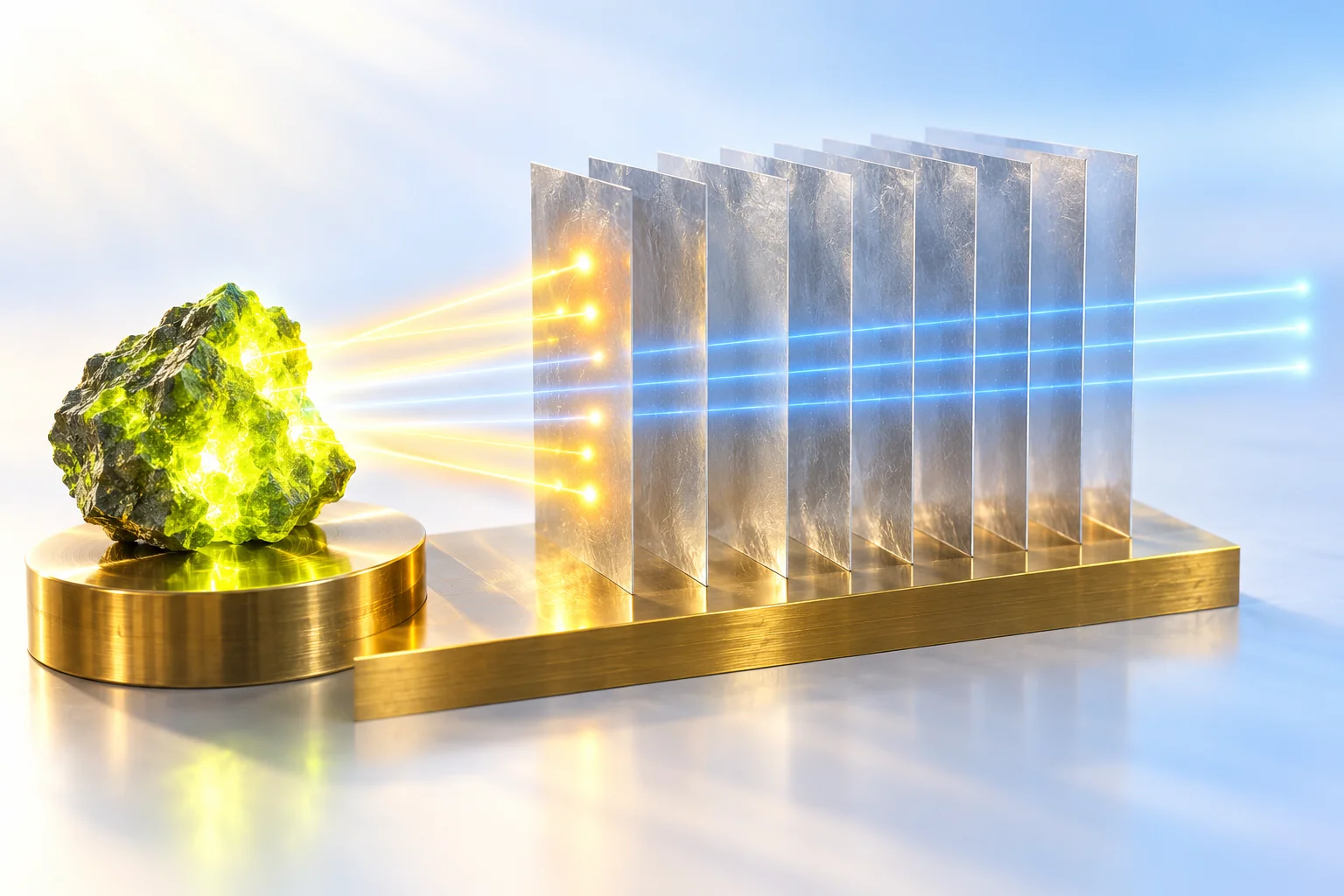
Rutherford Splits Uranium's Rays into Alpha and Beta (1899)
Rutherford's foil-by-foil measurements, signed in Cambridge in September 1898 and published in January 1899, showed two components in uranium radiation; identifying them as electrons and helium nuclei took another decade.

The Curies Discover Polonium and Radium (1898)
In 1898 the Curies announced polonium and radium by following radioactivity through pitchblende, and by 1902 several tons of mine residue had yielded 0.12 g of radium chloride.

J.J. Thomson Discovers the Electron (1897)
In 1897 J.J. Thomson measured the mass-to-charge ratio of cathode rays, found it over a thousand times smaller than a hydrogen ion's, and concluded that atoms contain far lighter charged particles.

Becquerel and the Uranium Rays (1896)
In 1896 photographic plates stored in a drawer during cloudy weather showed Henri Becquerel that uranium emits radiation without sunlight, a discovery that won him half of the 1903 Nobel Prize and gave its name to the unit of radioactivity.
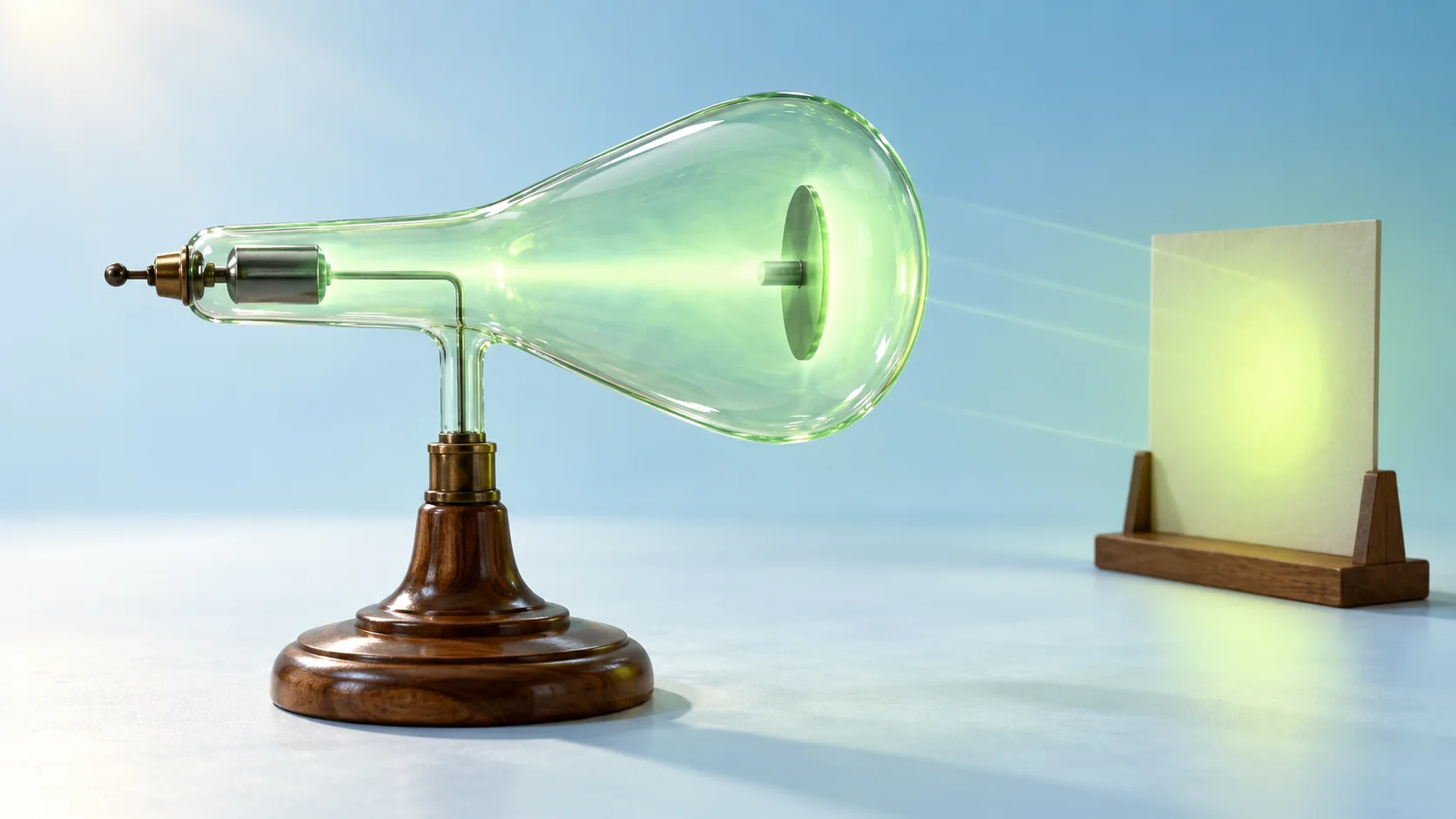
Röntgen Discovers X-rays (1895)
In November 1895 Wilhelm Röntgen noticed a screen glowing beside a covered discharge tube, spent about seven weeks testing the invisible rays, and published the discovery of X-rays that swept the world in 1896.
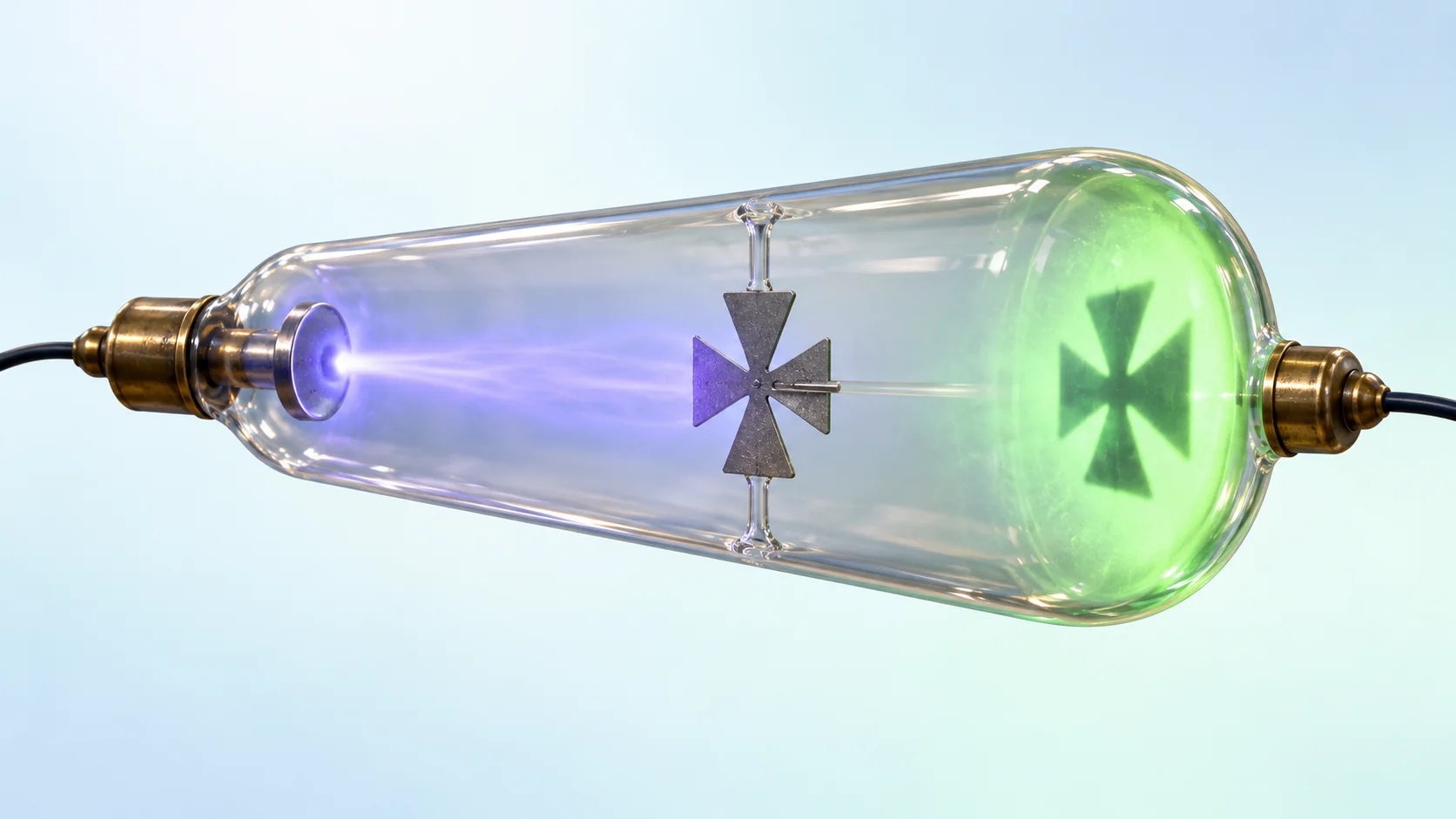
Particle or Wave? Cathode Rays from Faraday to the Crookes Tube
From Faraday's dark space in 1838 to Crookes's "radiant matter" lecture in 1879 and Perrin's negative-charge measurement in 1895, cathode rays split physicists into particle and wave camps and built the vacuum tools behind X-rays and the electron.

Mendeleev's Periodic Table and Its Blanks (1869)
Mendeleev's 1869 table ordered 63 elements by atomic weight and left gaps whose predicted occupants, gallium, scandium and germanium, were found by 1886.
Weighing the Invisible — Dalton's Atomic Theory (1808)
Dalton's 1808 atomic theory gave every element an atom with a characteristic weight and explained the law of multiple proportions, even though his rule of greatest simplicity made water HO and oxygen 7 instead of 16.

Ancient Atomism: Democritus, Epicurus and the Uncuttable Atom
Democritus and Epicurus imagined uncuttable atoms in a void; Lucretius's poem carried the idea, a 1417 rediscovery and Pierre Gassendi revived it, and modern physics kept the name while splitting the atom.